
What Are the Different Types of Cutting Tools?

Time:2026-11-03 Author:Sophia
0%

Cutting Tools are not a single family of interchangeable metal edges. They include turning inserts, drills, milling cutters, broaches, taps, reamers, and abrasive tools. Each removes material in a different way. A carbide insert may shape a steel shaft on a lathe; a twist drill makes a hole; an end mill cuts a slot or shoulder. The right choice depends on workpiece material, machine capability, required finish, and production volume. Small details matter.

The market is substantial. Grand View Research estimated the global cutting tools market at about US$24.6 billion in 2023 and projected continued growth through 2030. Market estimates vary by scope, so they should be read as indicators, not exact measures of every tool category. For practical context, toolmakers’ catalogs and machining handbooks explain the geometry behind those categories: rake angle, edge preparation, coating, and chip control all affect performance.

A useful historical reference is Frederick Winslow Taylor, whose 1906 study, The Art of Cutting Metals, helped make tool performance a measurable engineering subject. His work underscores a still-relevant point: cutting conditions and tool geometry must be considered together. That is not a universal recipe. A tool that works well in aluminum may fail in hardened steel, and a longer-lasting edge may not produce the lowest cost per part. This guide compares the main types of Cutting Tools, their typical uses, and the trade-offs that matter on the shop floor. The best choice is often less obvious than it looks.
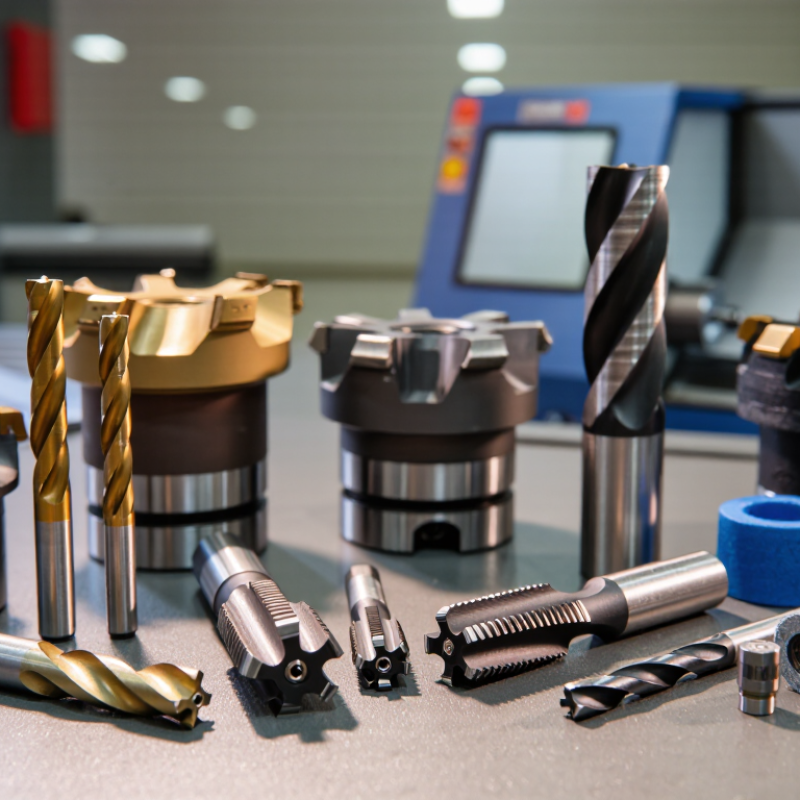
What Are the Different Types of Cutting Tools?

How Cutting Tools Are Classified by Design and Function

Cutting tools can be classified by their design and the work they perform. A single-point tool has one main cutting edge. It is common in turning, where a lathe tool removes material as a workpiece rotates. Boring tools enlarge existing holes, while shaping tools cut flat surfaces with a repeated stroke. Shape matters. Edge angle and tool rigidity affect surface finish, heat, and how steadily the tool cuts.

Multi-point tools use several cutting edges. A drill makes holes, while an end mill removes material from flat surfaces, slots, or pockets. Saw blades cut along a narrow path, and grinding wheels use many abrasive grains for fine finishing. Tools can also be grouped by function: roughing removes material quickly, threading forms screw profiles, and finishing aims for closer dimensions. The boundaries can blur. A milling cutter may rough or finish, depending on its geometry and setup.

Tips: Match the tool to the material and operation. Check that the cutting edge is sharp, the tool is secure, and the workpiece is firmly held. Watch for vibration, a rough surface, or unusual heat; these can signal a poor setup or worn edge. Classification helps, but real cuts can be less tidy than a chart suggests.

Single-Point Tools for Turning and Shaping

Single-point cutting tools use one main cutting edge to remove material. In turning, the workpiece spins while the tool advances along its surface. This produces straight shoulders, tapers, and grooves, depending on the tool’s path. On a shaping machine, the tool moves back and forth across a mostly stationary workpiece. Cutting usually happens on the forward stroke; the return stroke clears the tool. It is a simple motion, but setup matters. A tool set too high or too low can leave a poor finish or create unnecessary force.

Tool geometry affects how it cuts. Rake angle helps direct the chip, while clearance keeps the tool flank from rubbing against the fresh surface. A small nose radius can improve finish, though an overly large radius may increase chatter on a less rigid setup. Tool material should match the workpiece and cutting conditions. In practice, even a sound setup may need adjustment; vibration and chip shape are useful clues, not perfect answers.

Tips: Secure the tool close to its holder to reduce flex. Check its height before turning, and use a steady feed rather than forcing the cut. Watch for long, tangled chips and unusual heat. Stop and inspect if the tool rubs, chatters, or leaves a torn surface. Small changes can help, but record them so the next pass is not guesswork.

Multi-Point Tools for Drilling, Milling, and Sawing

Multi-point cutting tools remove material with several edges working in sequence or at once. Sharing the cutting load can improve efficiency, but setup still matters. Small changes count.

In drilling, a twist drill’s cutting lips form a hole while its flutes carry chips outward. A steady feed and suitable speed help limit heat and wandering. For a deep hole, withdrawing the drill periodically can clear packed chips. The right approach depends on the material and drill geometry; no single speed suits every job.

Milling cutters use multiple teeth to shape faces, slots, and contours as the cutter or workpiece moves. Tooth count, engagement, and chip removal all affect finish and tool life. Saw blades also rely on repeated teeth, each making a small cut as the blade advances. Keep the work supported. Check the cut line. A dull or poorly set tooth can leave rough edges or pull the blade off course. A tidy setup can still hide vibration, so listening and inspecting the first pass are worthwhile. That judgment does not replace measurement.

What Are the Different Types of Cutting Tools?

Multi-point tools use multiple cutting edges to remove material during drilling, milling, and sawing.

These examples show the cutting-edge or tooth count on representative tool configurations: a twist drill has two cutting lips, a four-flute end mill has four flutes, a six-insert face mill has six cutting edges, and a circular saw blade has 40 teeth. Actual counts vary with tool design and application.

Abrasive Tools for Grinding and Finishing

Abrasive tools use hard mineral grains to cut, smooth, or polish a surface. Grinding wheels remove material quickly and can shape welds, tool edges, and rough castings. Their performance depends on abrasive type, wheel bond, and grain size. Coarse grains cut faster but leave deeper marks. Fine grains create a smoother finish, though they may work more slowly. Small changes matter.

Flap discs, sanding belts, and abrasive sheets suit different stages of finishing. A flap disc can blend a weld while reducing visible transitions between the weld and base metal. Belts work well on broad, flat surfaces, while sheets help reach corners and curved details. Keep the tool moving. Holding it in one spot can leave gouges or discoloration. Heat builds quickly, especially on thin metal, so light pressure and short passes often help.

Choosing an abrasive is not only about speed. Consider the material, the amount to remove, and the finish required. Match the tool to its rated speed, and inspect it for damage before use. Wear eye and hearing protection, and use suitable dust controls. Even with experience, it is easy to remove more material than intended. Test on a scrap piece when possible; that extra step can save a finished part.

What Are the Different Types of Cutting Tools? — Abrasive Tools for Grinding and Finishing

Abrasive Tool Type Typical Abrasive Material Common Forms Typical Applications Suitable Materials Key Selection Consideration
Bonded abrasive grinding wheel Aluminum oxide, silicon carbide, or other abrasive grains held in a bond Straight wheel, cup wheel, saucer wheel, mounted point Bench and surface grinding, tool sharpening, weld removal, and precision grinding Aluminum oxide is commonly used for steels; silicon carbide is often used for cast iron, stone, and nonferrous materials Choose grain, grit size, grade, structure, and bond for the work material, machine, and operation. Use only a wheel rated for the machine speed.
Coated abrasive Aluminum oxide, silicon carbide, zirconia alumina, or ceramic alumina bonded to a flexible backing Sheets, belts, discs, rolls, and abrasive strips Stock removal, deburring, sanding, and progressive surface finishing Metals, wood, plastics, paint, and composites, depending on abrasive type and backing Grit number indicates particle size: lower numbers are generally coarser, while higher numbers are generally finer. Use a suitable backing and avoid loading the abrasive.
Flap wheel or flap disc Coated abrasive flaps, commonly aluminum oxide or zirconia alumina Radial flap wheels, mounted flap wheels, and angle-grinder flap discs Blending welds, deburring edges, removing surface scale, and refining scratches Primarily steel and stainless steel; other materials depend on abrasive and tool specification Flaps wear away to expose fresh abrasive. Select the disc shape and grit for the surface, and follow the tool’s speed and mounting requirements.
Nonwoven abrasive Abrasive grains dispersed through a synthetic-fiber web Hand pads, finishing wheels, discs, and belts Light deburring, cleaning, blending, and producing uniform satin finishes Metals, plastics, and other surfaces compatible with the selected abrasive grade Its open, conformable structure is useful on irregular surfaces and can reduce aggressive cutting compared with many conventional grinding abrasives.
Abrasive stone Aluminum oxide, silicon carbide, or diamond abrasive Bench stones, sharpening stones, honing stones, and mounted stones Manual sharpening, edge honing, precision deburring, and finishing small features Tool steels and other metals; diamond stones can also be used on hard materials such as carbide Use the correct stone grade and lubricant where specified. Keep the stone flat and match its abrasive to the workpiece hardness.
Superabrasive grinding wheel Diamond or cubic boron nitride (CBN) in a metal, resin, or vitrified bond Peripheral wheels, cup wheels, and shaped profile wheels Precision grinding of hard, wear-resistant materials and high-volume production work Diamond is commonly used for carbide, ceramics, glass, and stone; CBN is commonly used for hardened ferrous alloys Diamond is generally unsuitable for grinding steel at high temperatures because of chemical interaction. Select the bond and wheel specification for the work material and coolant conditions.

Specialized Tools for Nontraditional Cutting Methods

Nontraditional cutting tools remove material without relying on an ordinary blade. Electrical-discharge machining (EDM) uses controlled sparks to shape conductive metals, even inside a narrow cavity. It applies little cutting force. But it cannot cut insulating materials, and electrode wear can affect accuracy.

Abrasive waterjet systems push water and garnet through a small nozzle, cutting stone, composites, or metal with little heat distortion. The trade-off is real: abrasive use, pump maintenance, and edge taper need attention. Laser cutting concentrates heat for fast, detailed profiles, though sensitive alloys may develop a heat-affected edge.

Ultrasonic machining uses a vibrating tool and abrasive slurry, making it useful for brittle ceramics and glass. Plasma cutting handles electrically conductive sheet and plate quickly, but its heat can leave a rougher edge.

A 2024 Grand View Research report estimated the global laser-cutting-machine market at about US$6.5 billion in 2023, reflecting substantial industrial demand—not proof that lasers suit every job.

Match the method to material, thickness, tolerance, and finish requirements. For example, a shop cutting a thin stainless panel may favor laser speed; a thick, heat-sensitive composite may be better suited to waterjet.

I would still test a sample. Setup assumptions can be wrong. Check kerf width, edge quality, consumable costs, and safety controls before committing to production.

FAQS

What is the main difference between single-point and multi-point tools?

A single-point tool cuts with one main edge. Multi-point tools use several edges, such as drill lips or milling teeth.

How does a single-point tool work on a lathe?

The workpiece rotates while the tool advances along its surface. Its path can create shoulders, tapers, or grooves.

What do rake and clearance angles affect?

Rake helps direct chips, while clearance reduces rubbing against the fresh surface. Small adjustments matter.

Why should a drill be withdrawn during some deep holes?

Periodic withdrawal can clear packed chips from the flutes. This may help control heat and keep the hole on course.

What can cause a rough milled surface?

Tooth count, cutter engagement, chip removal, or vibration can affect finish. Check the first pass closely.

How do saw teeth remove material?

Each tooth makes a small cut as the blade advances. Support the workpiece and watch the cut line.

What is the difference between roughing and finishing?

Roughing removes material quickly; finishing aims for closer dimensions. One cutter may do either, depending on its setup.

What warning signs suggest a tool or setup needs inspection?

Watch for unusual heat, vibration, tangled chips, or a torn surface. These clues are useful, but not perfect.

Conclusion

Cutting Tools are classified by their design and the way they remove material. Single-point tools have one main cutting edge and are commonly used for turning and shaping, where they form a workpiece by removing material in a controlled path. Multi-point tools use several cutting edges to work more quickly or create particular shapes. Drills make holes, milling tools produce slots and surfaces, and saws separate material along a cut.

Other types serve specialized purposes. Abrasive tools, such as grinding and finishing wheels, use small hard particles to smooth surfaces, refine dimensions, or remove minor imperfections. Tools for nontraditional cutting methods use approaches beyond conventional sharp edges and are selected when a job requires a particular level of precision, material compatibility, or finish. Understanding these categories helps match a tool to the material, task, and desired result.

Sophia

Sophia

Sophia is a dedicated marketing professional with an exceptional depth of knowledge about her company's products and services. With a keen understanding of market trends and customer needs, she crafts insightful blog posts that not only inform but also engage readers, enriching the company’s online......