Precision-Engineered Cemented Carbide Products
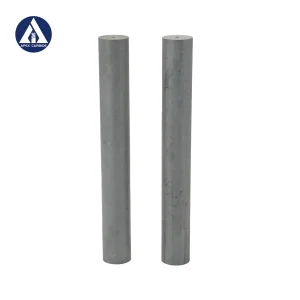
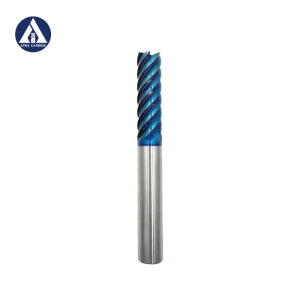
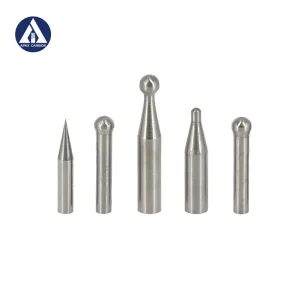
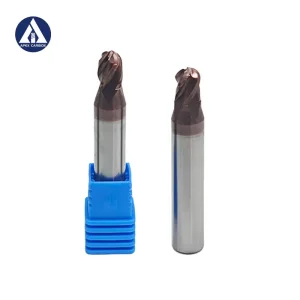
Explore our top-tier catalog of solid carbide blanks, rotary burrs, end mills, and indexable solutions built for maximum tool life and cut consistency.
The Strategic Evolution of China Carbide Inserts & Tooling Manufacturing
A Comprehensive Metallurgical and Economic Analysis for Industrial Sourcing Directors, Tooling Engineers, and Manufacturing Executives
Metallurgical Superiority & Grain Structure
In modern CNC machining, the demand for precision, thermal stability, and wear resistance has shifted cemented tungsten carbide technology from conventional micro-grains to advanced submicron (0.4–0.8 µm) and nano-grain (<0.2 µm) microstructures. China’s manufacturing ecosystem, backed by direct access to raw APT (Ammonium Paratungstate) supplies, now leads the world in integrated powder metallurgy.
By optimizing Cobalt (Co) binder distribution and introducing grain growth inhibitors such as Vanadium Carbide (VC) and Chromium Carbide (Cr₃C2), China carbide insert manufacturers produce inserts and tool blanks with optimal balances of Transverse Rupture Strength (TRS > 4,000 MPa) and hardness (HV30 up to 1,900).
Global Sourcing Realities & Supply Chain Resilience
Global procurement strategies for turning, milling, and drilling operations require more than low unit costs. Sourcing managers evaluate Total Cost of Ownership (TCO), batch-to-batch dimensional stability, tool-life predictability, and rapid customization cycles.
Leading OEMs across North America, Europe, and Asia-Pacific rely on tier-1 Chinese manufacturers to eliminate geopolitical bottlenecks and volatile lead times. Through integrated 100-bar Sinter-HIP pressure sintering and automated 5-axis CNC grinding centers, Chinese carbide suppliers offer ISO-standard and custom-engineered insert solutions with unmatched delivery speeds.
Carbide Inserts Development Trends & Technological Innovations
Analyzing the key technological shifts driving next-generation cutting tool performance across automated manufacturing systems.
Submicron & Gradient Structure Metallurgy
Modern machining of superalloys (Inconel, Titanium, Rene 41) demands insert substrates that resist severe thermal cracking and deformation. Development is focused on functionally graded cemented carbides (FGC), featuring a cobalt-enriched tough surface layer combined with a highly wear-resistant substrate core.
Advanced PVD & CVD Nanocomposite Coatings
Transitioning from single-layer TiAlN to multi-layer HiPIMS (High-Power Impulse Magnetron Sputtering) TiSiN, AlTiN/CrN, and Diamond-Like Carbon (DLC) coatings. Coating stress engineering and arc-evaporation smoothing techniques dramatically reduce friction coefficients down to 0.15 while withstanding cutting temperatures above 1,100°C.
3D Complex Chipbreaker Topography
Additive manufacturing (3D printing) of pressing dies allows insert designers to press highly intricate, non-linear chipbreakers. These geometries optimize chip curling, break continuous stringy chips in soft stainless steel/aluminum, and reduce cutting forces by up to 25%.
Global Procurement Demand & Sourcing Optimization
How international procurement groups reduce tooling expenditure while accelerating production velocity through Chinese direct-factory partnerships.
Key Procurement Evaluation Criteria
Industrial buyers and tooling distributors evaluate Chinese suppliers across four non-negotiable vectors:
- Batch Consistency (Cpk ≥ 1.67): Tight control over WC grain size distribution and cobalt content to eliminate premature tool failure on unmanned night shifts.
- Geometric Integrity: Strict compliance with ISO 1832 insert standards (CNMG, DNMG, VNMG, WNMG, APKT, SEKT) and ANSI designations.
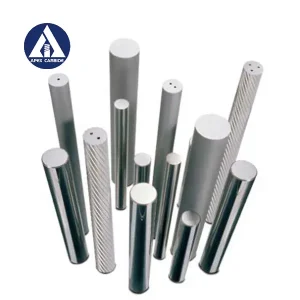
- Custom Preform Speed: Ability to deliver custom ground tool blanks, cut-to-length rods with coolant holes, and semi-finished preforms within 7 to 15 working days.
- Coating Adhesion: Scratch-test adhesion values exceeding 80 N to prevent micro-delamination under heavy interrupted cuts.
Total Cost of Ownership (TCO) Comparison
Comparing traditional Western brand purchasing vs. Tier-1 Direct Chinese OEM partnerships:
| Cost Vector | Tier-1 Western Tooling | Direct China OEM (APEX) |
|---|---|---|
| Unit Cost / Edge | Premium ($8.00 - $18.00) | Optimized ($2.20 - $5.50) |
| Customization MOQ | 500 - 1,000 Pieces | Flexible (1 - 100 Pieces) |
| Raw Material Supply | Subject to Export Tariffs | Direct Source Integration |
| Lead Time (Custom) | 8 - 12 Weeks | 2 - 3 Weeks |
Macro Industry Sector Solutions
Tailored carbide substrate, coating, and geometry matrix designed for mission-critical manufacturing sectors worldwide.
Aerospace & Defense
Dedicated carbide grades for milling and turning Inconel 718, Hastelloy, and Ti-6Al-4V. Features high thermal conductivity substrates paired with ultra-smooth PVD AlTiN coatings that prevent Built-Up Edge (BUE) and notch wear.
- High-feed milling inserts (RPMT, RDMT)
- Coolant-hole carbide rod blanks for deep hole drilling
Automotive & EV Powertrain
High-speed machining solutions for aluminum alloy battery housings, cast iron engine blocks, and hardened transmission shafts (58–62 HRC hard turning).
- CVD TiCN+Al₂O₃ thick-layer turning inserts (CNMG, WNMG)
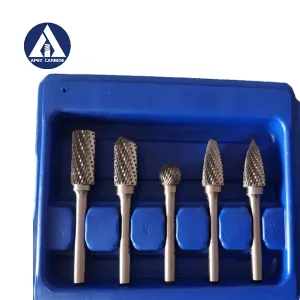
- PCD-tipped and solid carbide rotary burrs for deburring
Precision Mold & Die
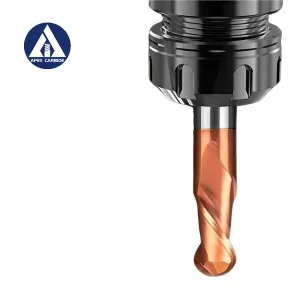
Designed for long-reach contour milling of hardened tool steels (NAK80, SKD11, Stavax). Fine ball-nose end mills and micro-diameter carbide rods maintain sub-micron profile accuracy.
- 55-68 HRC Nano-blue and TiSiN coated end mills
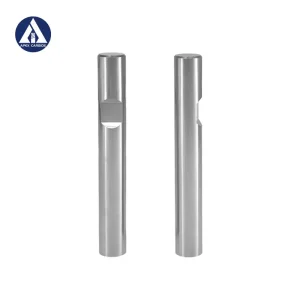
- Pre-ground chamfered carbide blanks with h5 tolerance
Metallurgical Precision & 100-Bar Sinter-HIP Process
A step-by-step look into our zero-defect manufacturing workflow from virgin raw tungsten powder to final inspection.
Six-Stage Zero-Defect Quality Chain
To ensure zero internal porosity and maximum bending strength, our manufacturing process adheres to rigid ISO 9001:2015 standards across six core manufacturing steps:
- Raw Material Sourcing: 100% virgin Tungsten Powder (99.95% purity) blended with cobalt and grain growth inhibitors. No recycled scrap powder used in prime tool lines.
- Automated Spray Drying & Granulation: Closed-loop PEG ball milling ensures uniform binder dispersion and pore-free powder flowability.
- Precision CNC Pressing: Swiss-made CNC automatic presses deliver uniform green density across complex 3D insert chipbreaker geometries.
- 100-Bar Sinter-HIP Furnace Processing: Integrated dewaxing, vacuum sintering, and 10 MPa Argon gas pressure consolidation at 1,450°C eliminates internal microporosities (A00, B00, C00 rating).
- 5-Axis Centerless & Peripheral Grinding: Agathon and Rollomatic CNC grinders hold insert cutting edge radiuses to ±0.002 mm.
- PVD Cathodic Arc Coating: Multi-layer nano-coatings applied under cleanroom conditions with automated surface micro-honing post-treatment.
Certified Quality & Laboratory Testing
Every production batch is supplied with a comprehensive Inspection Certificate (MTC) verifying critical material parameters:
| Property Tested | Test Equipment / Standard | Typical Target Value |
|---|---|---|
| Density (g/cm³) | Archimedes Hydrostatic Balance | 14.05 - 14.85 |
| Hardness (HRA / HV30) | Vickers / Rockwell Hardness Tester | 91.5 - 93.8 HRA |
| Coercive Force (kA/m) | Coercimeter (ISO 3326) | 16.0 - 28.0 |
| Magnetic Saturation | Sigmameter Metallurgical Analyzer | 150 - 165 4πμTm³/kg |
| TRS (Bending Strength) | 3-Point Bending Test Rig | > 3,800 - 4,500 N/mm² |
Global Compliance, Sustainability & Engineering Support
Meeting strict international regulatory frameworks while providing localized technical assistance across key manufacturing hubs.
REACH & RoHS Compliance
All tungsten carbide products, rods, and indexable inserts comply fully with EU REACH regulations and RoHS directives. No hazardous heavy-metal binder additives or illegal chemical coatings are utilized.
Responsible Minerals Initiative (RMI)
We adhere strictly to responsible sourcing guidelines. Our raw material supply chains for Tungsten (W), Cobalt (Co), and Tantalum (Ta) are audited and certified conflict-free from ethical smelters.
OEM Customization & Field Support
Our multi-lingual application engineering team supports CAD/CAM drawing reviews (STEP, DXF, DWG), tool geometry recommendations, speed/feed optimization, and custom stock buffering programs.
Frequently Asked Questions by Tooling Engineers & Sourcing Directors
Comprehensive answers covering carbide metallurgy, insert selections, sourcing protocols, and custom tooling workflows.
Expanded Cemented Carbide Product Range
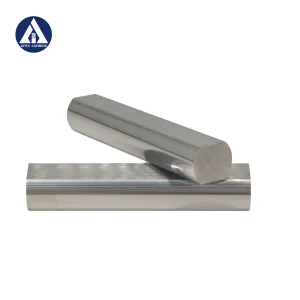
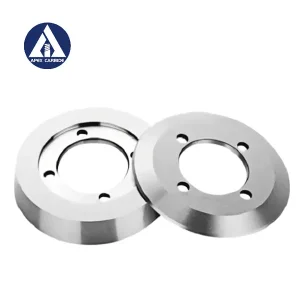
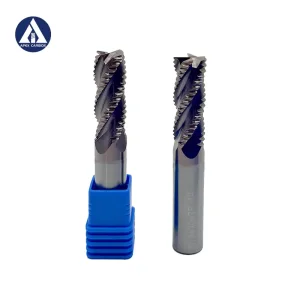
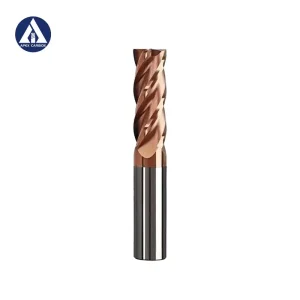
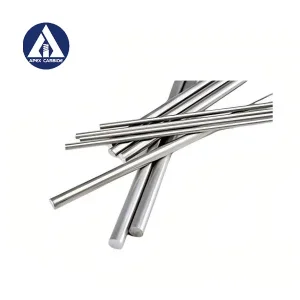
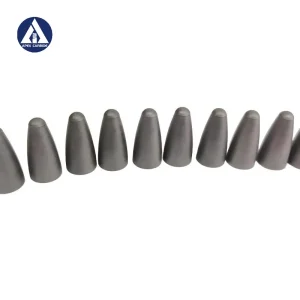
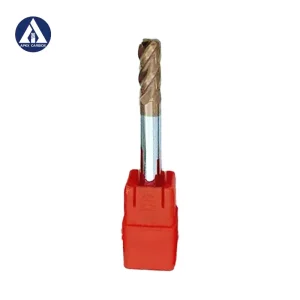
Explore our comprehensive array of pre-ground blanks, circular cutter blades, roughing end mills, and European-spec cut-to-length carbide bars.
Optimize Your Manufacturing Cost Structure Today
Partner directly with China's leading cemented carbide manufacturer. Submit your CAD drawings, required insert ISO codes, or rod blank specifications to receive instant factory-direct quotations and technical analysis within 24 hours.