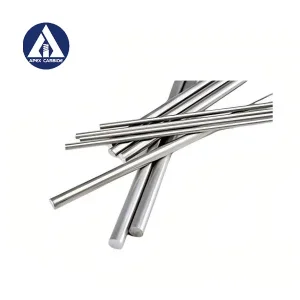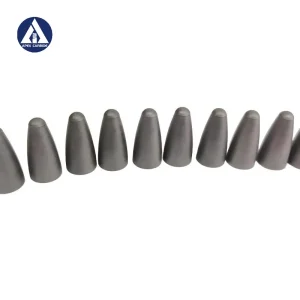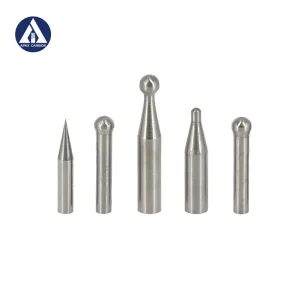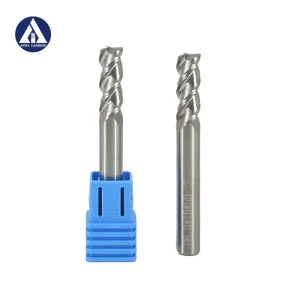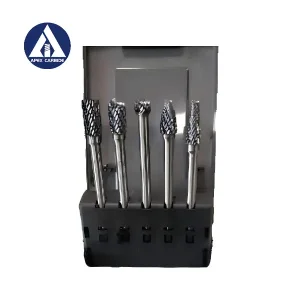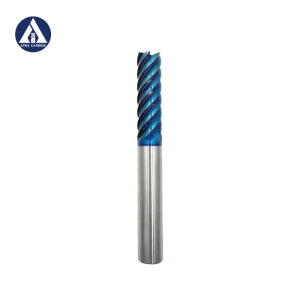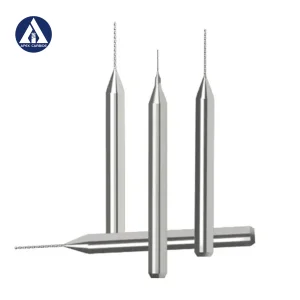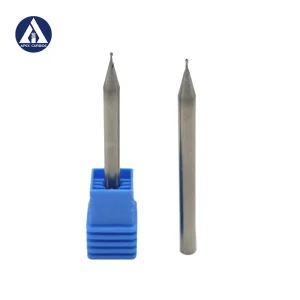
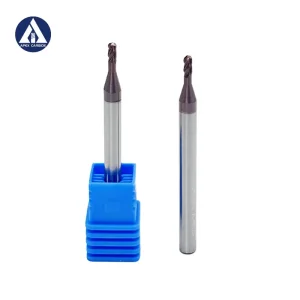
Featured Sinter-HIP Blanks & Milling Tools
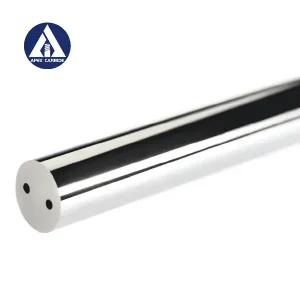
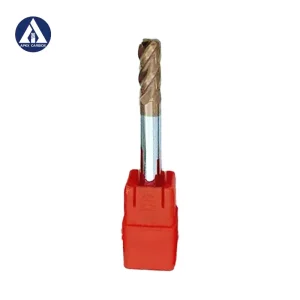
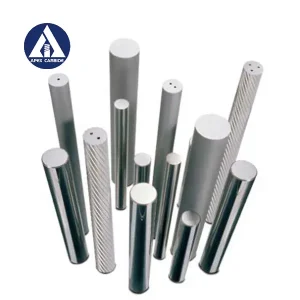
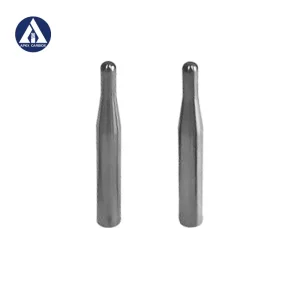
Explore initial high-demand solid carbide blanks, nano-coated round bars, and precision ground preforms directly from certified manufacturing lines.
Global Macro-Industrial Landscape & Supply Chain Resilience
Strategic analysis of cemented carbide manufacturing, raw material upstream consolidation, and precision machining economics across worldwide manufacturing hubs.
Upstream Material Hedging & APT Parity
The contemporary cutting tool sector operates amid dynamic shifts in ammonium paratungstate (APT) indices and volatile refractory metal trade. Primary global tooling producers mitigate fluctuating supply risks by consolidating with integrated powder-to-rod facilities. By implementing strictly audited domestic mining routes, secondary tungsten reclamation workflows, and proprietary spray-drying protocols, tier-1 suppliers assure pricing predictability and consistent submicron grain chemistry across global markets.
High-Feed Machining (HFM) Paradigms
Modern CNC machining centers running at spindle speeds surpassing 24,000 RPM demand preforms exhibiting high transverse rupture strength (TRS > 4,000 MPa) and elevated fracture toughness. Standard catalog rods frequently fail through microscopic thermal cracking under aggressive dry milling conditions. Sinter-HIP processing under 100-bar argon densification eliminates micro-voids, enabling tool fabricators to machine nickel-based superalloys and heat-treated die steels reliably.
Near-Net-Shape (NNS) Lean Fabrication
Grinding stock removal accounts for over 35% of total toolmaking production costs and diamond wheel wear. Advanced preforming technologies—including pre-sintering green-stage machining, axial step compaction, and helical coolant channeling—deliver blanks engineered closely to finished geometry. Toolmakers save up to 45% in cycle time during 5-axis flute grinding, significantly accelerating market launch for custom cutting programs.
Metallurgical Classification & Grade Engineering
Comprehensive empirical data mapping Cobalt percentage (Co), grain size matrix, transverse rupture strength, and corresponding cutting application envelopes.
| Alloy Grade Matrix | Cobalt Binder (% wt) | Grain Size (µm) | Hardness (HRA / HV30) | TRS (N/mm²) | Primary Industrial Substrates |
|---|---|---|---|---|---|
| UF-06 (Ultra-Fine) | 6.0% ± 0.5 | 0.4 - 0.6 | 93.2 HRA / 1780 HV | 3,800 | Abrasive non-ferrous, Si-Al alloys, graphite, reinforced CFRP composites. |
| SM-10 (General High-Stress) | 10.0% ± 0.5 | 0.6 - 0.8 | 92.2 HRA / 1640 HV | 4,200 | Standard carbon steels, tool steels (≤ 52 HRC), alloy iron, general drilling. |
| TF-12 (Toughness Hardened) | 12.0% ± 0.5 | 0.2 - 0.4 | 92.6 HRA / 1690 HV | 4,500 | Hardened mold steels (55-65 HRC), Inconel 718, Titanium Ti-6Al-4V, heavy interrupted cuts. |
| MC-15 (Heavy Impact Blank) | 15.0% ± 0.5 | 1.0 - 1.4 | 89.0 HRA / 1280 HV | 3,600 | Forming punches, rotary cold heading dies, rotary burrs, severe shock wear components. |
Localized Engineering Support & Regulatory Compliance
Ensuring frictionless supply continuity with international metallurgical certification, zero-conflict procurement, and localized technical response.
Rapid Consignment & Regional Hubs
Minimizing inventory downtime is vital for tool grinding shops. Our distributed stocking framework supports regional fulfillment centers with pre-ground cut-to-length solid blanks, h5 centerless ground shafts, and standard DIN length rods.tooling designers can order batches from 1 piece for metallurgical qualification up to 100,000 units for continuous OEM automated regrinding campaigns with guaranteed lead times under 14 days.
ISO 9001:2015 & Full Traceability
Every blank produced carries comprehensive laser etching detailing powder lot, furnace batch ID, and density-metallographic validation numbers. Quality compliance aligns with stringent aerospace (AS9100 baseline) and automotive standards. Material test certificates (MTCs) according to EN 10204 3.1 accompany deliveries, verifying cobalt saturation, magnetic saturation (4πσ), and coercive force (Hc).
RMI & Conflict-Free Sourcing Compliance
Responsible procurement forms our operational cornerstone. Raw tungsten (W) and cobalt (Co) feedstocks undergo rigorous auditing following the Responsible Minerals Initiative (RMI) guidelines. Facilities comply fully with EU REACH and RoHS restrictions, guaranteeing that cutting tool preforms imported into European and North American territories satisfy hazardous chemical thresholds and ethical origin criteria.
Critical Sector Implementation & Case Scenarios
Field-proven performance across aerospace propulsion, EV battery case milling, micro-electronic die production, and heavy industrial roll slitting.
Aerospace Blisks & Exotic Alloys
Machining turbine blisks from titanium alloys (Ti-6Al-4V) and Inconel 718 generates thermal spikes up to 900°C at the cutting interface. Custom carbide rods engineered with twin helical coolant channels (30° and 40° angles) guide high-pressure coolant directly to the tool tip, tripling tool life and eliminating thermal edge burn.
High-Density Semiconductor & PCB Drilling
Micro-drills for multi-layer HDI printed circuit boards demand exceptional shank rigidity and runout under 0.001 mm. Ultra-fine submicron blanks (< 0.3 µm) provide the ultimate edge retention necessary to drill through abrasive copper-clad laminates and woven glass fibers without generating copper burrs or hole misalignment.
Automotive EV Battery Trays & Powertrain
Dry, high-speed profile milling of extruded thin-wall 6000-series aluminum alloy demands razor-sharp cutting geometry and mirror-polished flutes to mitigate chip welding. Blanks preformed with engineered flute lands permit faster grinding sweeps and flawless chip evacuation under dry machining protocols.
Continuous Converting & Slitting Blades
Beyond rotary tools, cemented tungsten carbide discs and circular blades maintain critical dimensional stability on rapid slitting lines for lithium-ion separator films, corrugated packaging, and foil rolling. Near-zero thermal deformation prevents edge chipping and keeps burr-free coil cuts across hundreds of continuous running hours.
Technology Roadmap: Next-Gen Cutting Preforms
Architecting the metallurgical frontier through functionally graded matrixes, AI-assisted sintering analytics, and optimized binderless chemistry.
Sub-Micron Sinter-HIP
Consolidating 100-bar low-pressure sintering to achieve theoretical density (>99.98%). Complete automation of centerless CNC grinding for h5 standard tolerances on standard metric and imperial diameters.
Functionally Graded Carbide
Gradient cobalt diffusion producing a ultra-hard exterior shell (>94 HRA) for maximum abrasion resistance, backed by a ductile high-cobalt core that resists dynamic chatter and sudden shank breakage.
Complex Additive Blanks
3D binder jetting of tungsten carbide allows cooling channels that mimic fluid-dynamic contours, eliminating right angles and enabling unprecedented thermal dissipation in micro-end mills.
Alternative High-Entropy Binders
Pioneering nickel-iron-ruthenium or cobalt-free high-entropy alloy matrices to ensure exceptional corrosion resistance in medical titanium milling, eliminating binder leaching in severe coolant exposure.
Technical Sourcing & Procurement FAQ
In-depth responses resolving engineering questions on grain structure, grinding allowances, coolant channel runout, and OEM private labeling.
Precision Cutters, Blanks & Micro-Tools
Explore our secondary suite of precision-ground blanks, micro-grain rotary burrs, European-standard rods, and specialized end mills.