
Featured Carbide Discs & Slitting Cutters for Mumbai Facilities
-
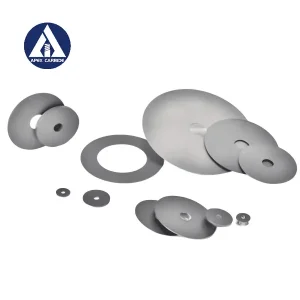
Wholesale Tungsten Carbide discs cutting discs with various sizes available (Mumbai Heavy Slitting Edition)
Explore Specifications -
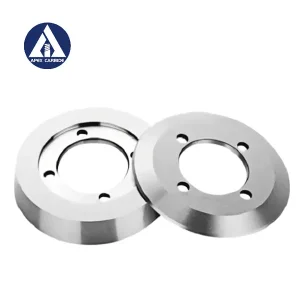
China Tungsten Carbide Circular Cutters Blades (Mumbai Industrial Converting Grade)
Explore Specifications -
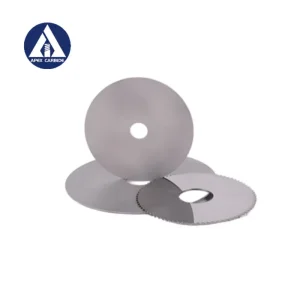
Tungsten Carbide Disc Blade, Cemented Carbide Circular Custom Discs (Thane Precision Engineering)
Explore Specifications -
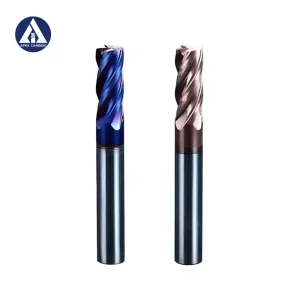
Wholesale Tungsten Solid Carbide End Mill (Mumbai Toolroom & Mold Machining Grade)
Explore Specifications
Industrial Reality: The Surging Demand in the Mumbai-Pune Industrial Corridor
Bridging metallurgical raw material capacity in China with Maharashtra’s high-precision manufacturing, automated converting, and heavy engineering hubs.
The MMR Industrial Epicenter
The Mumbai Metropolitan Region (MMR)—stretching across Thane-Belapur, Navi Mumbai (Rabale, Mahape), Taloja MIDC, Tarapur, and Vasai-Virar—serves as the critical operational gateway for India's advanced manufacturing. Alongside the contiguous Pune-Chakan-Talegaon automotive cluster, the region demands extreme tool reliability to cut downtime on automated processing lines.
Continuous Converting Demands
In logistics corridors such as Bhiwandi and Panvel, massive e-commerce packaging plants and high-speed corrugated box lines operate round-the-clock. Slitting thin foils, corrugated fluting, lithium-ion battery separators, and multi-layer film requires carbide circular blades that eliminate burrs and minimize dust generation through razor-sharp mirror-polished cutting edges.
Thermal Shock & Wear Resistance
Fabricators processing stainless steel pipes and structural sections around Khopoli and Tarapur struggle with standard high-speed steel (HSS) blades dulling within hours due to friction heat. Submicron-grain tungsten carbide discs with specialized cobalt binders guarantee superior thermal conductance and structural integrity under severe mechanical shear.
Global Macro Dynamics & The Chinese Factory Efficiency Engine
Why Indian procurement heads and plant directors partner directly with Chinese tungsten carbide manufacturers to secure cost stability and metallurgical excellence.
Upstream Tungsten Ore Dominance
China holds over 80% of global tungsten reserves, primarily centered around Jiangxi and Hunan provinces. Direct factory partnership eliminates multiple trading layers, hedging Mumbai enterprises against volatile Ammonium Paratungstate (APT) spot prices and guaranteeing uncompromised 100% virgin powder usage without scrap dilution.
10MPa Sinter-HIP Consolidation
Atmospheric sintering leaves internal microporosities that cause catastrophic edge micro-chipping during high-RPM saw blade operation. Our facilities utilize computer-controlled 100-bar overpressure Sinter-HIP technology, consolidating tungsten carbide grains to near theoretical density (14.6–14.95 g/cm³) with virtually zero micro-voids.
5-Axis CNC Precision Grinding
Tool performance is governed by edge roughness and concentricity. Our production centers employ multi-axis Swiss and German CNC surface grinders, ensuring circular disc runout is strictly maintained within ±0.002 mm, with mirror surface polishing down to Ra 0.05 µm to eliminate material adhesion and friction build-up.
Tailored Application Scenarios Across Greater Mumbai & Maharashtra
Specific tool geometry and grade pairings adapted to local machinery, feed rates, and production environments.
1. High-Speed Metal Pipe & Tube Cold Sawing
Target Zone: Khopoli, Taloja, Boisar Tube Mills.
Operating Challenge: Severe tooth shock, work-hardening during ERW and seamless carbon/stainless steel tube parting.
Engineering Solution: Solid carbide saw blades formulated with 10–12% ultrafine cobalt binder (Grade APX-610), delivering balanced impact resistance (TRS ≥ 3,600 MPa) and high hot-hardness to withstand intermittent shocks up to 600°C without tooth fracture.
2. Corrugated Board, Paper & Packaging Slitting
Target Zone: Bhiwandi, Vasai, Palghar Converting Plants.
Operating Challenge: High blade wear caused by silica content in recycled kraft linerboard, causing excessive paper dust and ragged edge tears.
Engineering Solution: Mirror-polished circular rotary razor knives manufactured with sub-micron 0.6 µm WC grains (Grade APX-806, 92.8 HRA). Retains extreme surgical sharpness for 10 million linear meters between resharpening cycles.
3. Non-Ferrous & Heat Sink Extrusion Cut-Off
Target Zone: Thane-Belapur Engineering & Electronics Corridors.
Operating Challenge: Aluminum gumming, chip welding on cutting teeth, and burr formation on architectural/industrial profiles.
Engineering Solution: Custom tooth profile carbide saw blades with negative rake angles, mirrored chip breakers, and DLC (Diamond-Like Carbon) coatings that prevent built-up edge (BUE) and ensure mirror cross-cut surface finishes without secondary milling.
Comprehensive Metallurgical Grade Matrix for Discs & Blades
Evaluate transverse rupture strength, cobalt concentration, and grain morphology to specify the optimal grade for your shop floor.
| APEX Grade | Cobalt (Co %) | Grain Size (μm) | Density (g/cm³) | Hardness (HRA) | TRS (N/mm²) | Recommended Mumbai Application |
|---|---|---|---|---|---|---|
| APX-K05S | 4.5% | 0.4 (Nano) | 15.10 | 93.8 | 2,900 | Ultra-clean film, foil slitting, optical fiber cutting, PCB copper foil |
| APX-K10F | 6.0% | 0.6 (Submicron) | 14.95 | 92.8 | 3,200 | Corrugated carton slitting, rubber slitting knives, battery separators |
| APX-M20U | 8.0% | 0.8 (Fine) | 14.75 | 91.9 | 3,500 | Thin-wall stainless tube cutting, brass/copper slitting saws |
| APX-P30T | 10.0% | 1.0 (Medium-Fine) | 14.50 | 90.5 | 3,850 | Heavy-duty structural steel cold saw parting, interrupted cuts |
| APX-W40X | 12.0% | 1.2 (Tough) | 14.25 | 89.4 | 4,100 | Extreme shock resistance, rebar parting, high-vibration cut-off |
Navigating Procurement, JNPT Customs & Total Cost Efficiency
Transparent supply chain practices built for seamless imports into Mumbai (Nhava Sheva) without customs delays or hidden costs.
Efficient Logistics to JNPT (Nhava Sheva)
Located near core shipping hubs (Ningbo, Shenzhen, Shanghai), our consolidated freight routes ensure transit times to Jawaharlal Nehru Port Trust (JNPT / Nhava Sheva) within 14–18 days, alongside expedited air freight options to Chhatrapati Shivaji Maharaj International Airport (BOM) in 3–5 days for urgent line-down requirements.
Customs Documentation & HSN Clarity
Every commercial invoice and packing list is tailored to Indian Customs and ICEGATE standards. Precision cemented carbide circular discs and saw blades are clearly coded under exact HS Codes (such as 8202.39.00 and 8208.90), with certified Country of Origin (COO) certificates and precise Mill Test Certificates (MTC) to facilitate rapid duty clearing.
TCO Reduction: Beyond Initial Purchase Price
While standard local tooling might appear slightly cheaper upfront, frequent blade swaps, regrinding overhead, scrap caused by blade deflection, and unplanned press halts inflate true manufacturing expenses. APEX carbide discs deliver up to 350% lower cost-per-cut ratio across sustained high-volume production runs.
Technological Trajectories: The Next Decade in Carbide Tooling
How our R&D roadmap aligns with Industry 4.0 automation and green sustainability mandates across international markets.
AlTiN & PVD Nano-Composite Coatings
The industry is transitioning beyond standard TiN coatings toward silicon-doped high-entropy coatings like AlTiSiN and CrAlN. Deposited via state-of-the-art Cathodic Arc PVD at 450°C, these nano-coatings exhibit oxidation resistance up to 1,100°C, drastically expanding cutting speeds in dry cutting environments.
AI-Assisted Microstructural Inspection
To eliminate manual inspection oversights, our lines integrate automated 3D optical profilometry and eddy current non-destructive testing (NDT). Every saw blade blank is verified for residual stress balance, guaranteeing absolute flatness without warping under high peripheral RPMs.
Closed-Loop Tungsten Recycling & Green Powder
Sustainability mandates require traceable environmental footprints. APEX leads in secondary tungsten zinc-recovery processes, generating virgin-grade tungsten carbide with 70% lower carbon intensity, assisting multinational corporations in Mumbai in achieving their Scope 3 emission targets.
Frequently Asked Questions: Sourcing from China to Mumbai
Technical answers resolving key inquiries regarding quality validation, tolerances, sample orders, and shipping logistics.
Advanced Solid Carbide Blanks, Mills & Cutters for Maharashtra Industries
-
China Tungsten Carbide Circular Cutters Blades (Heavy Slitting Industrial Series)
Explore Specifications -
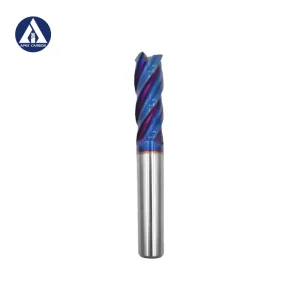
China 65 HRC Tungsten Solid Carbide Milling Cutters NaNo Blue (Hardened Steel Toolroom Grade)
Explore Specifications -
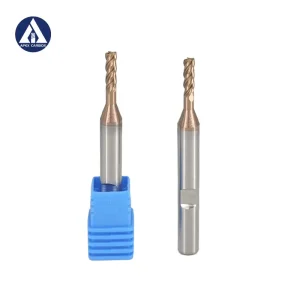
China 4-Flute Flat End Mill Weldon Shank CNC Cutter (General Machining Heavy Duty)
Explore Specifications -
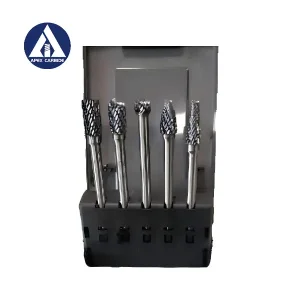
Wholesale Carbide Rotary Burrs (High Quality Short Delivery Time & Low MOQ Series)
Explore Specifications -
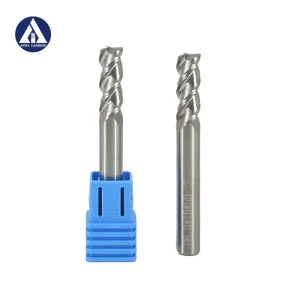
China Solid Carbide End Mills for Aluminium (High Gloss Polished Flute High-Speed Spec)
Explore Specifications -
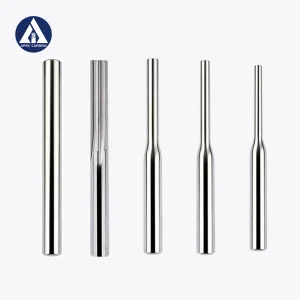
High Purity Cemented Carbide Round Bar Blanks (For IC Substrate & HDI PCB Micro Drills)
Explore Specifications -
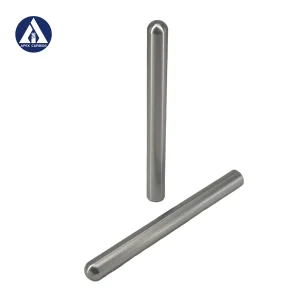
Preformed Ball Nose Blank Rods (Pre-Machined Sphere Tip for Toolmaking Shops)
Explore Specifications -
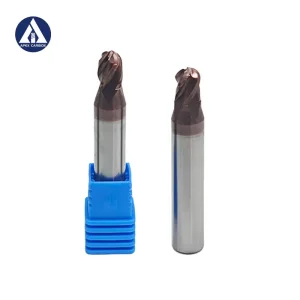
Wholesale 4 Flutes Ball Nose Carbide End Mills (TiALN Coating Heavy Die & Mold Finishing)
Explore Specifications
Ready to Elevate Your Cutting Efficiency & Tool Life?
Share your technical drawings, cutting material conditions, or current blade consumption parameters. Our metallurgical engineering team will provide grade optimization, sample confirmation, and a competitive factory quotation within 24 hours.