
Empowering Northern California’s High-Tech Advanced Machining Hub
The San Francisco Bay Area and adjacent Silicon Valley industrial corridors represent the world’s most demanding frontier for micro-scale and ultra-precision subtractive manufacturing. From semiconductor wafer handling fixtures and vacuum chambers in Fremont and Santa Clara to commercial space structures and medical robotics in South San Francisco, machine shops face unprecedented requirements for metallurgical stability, dynamic runout control, and microscopic cutting edge retention.
The Bay Area Precision Machine Tooling Dilemma
Local contract manufacturers and CNC milling houses serving San Francisco’s tech giants consistently encounter severe yield bottlenecks when machining difficult substrates such as Titanium Grade 5 (Ti-6Al-4V), Inconel 718, oxygen-free copper (OFE), and high-density IC substrate PCB cores. Traditional generic tungsten carbide blanks frequently suffer from unpredictable micro-voids, binder pooling, and cobalt-phase heterogeneity.
APEX Carbide bridges this technological gap by supplying factory-direct, vacuum Sinter-HIP densified solid carbide rods directly to tool manufacturers and cutting service centers throughout the San Francisco Bay corridor. By sustaining isotropic hardness profiles (up to 93.0 HRA) and transverse rupture strength exceeding 4,000 MPa, our rod blanks eliminate micro-chipping during high-speed trochoidal milling and ultra-high-feed micro-drilling.
Silicon Valley Grade Precision Parameters
Diameter Concentricity: Ground to strict ISO h5 / h6 diametrical standards with circular runout bounded within ≤0.002 mm.
Grain Structure: Submicron (0.6–0.8 μm) and ultrafine (0.4–0.6 μm) tungsten carbide powder synthesis prevents micro-fracture along cobalt boundaries.
Internal Pore Class: Certified below ISO 4505 Class A02, B00, C00, eliminating premature tool breakage under 40,000+ RPM spindle stress.
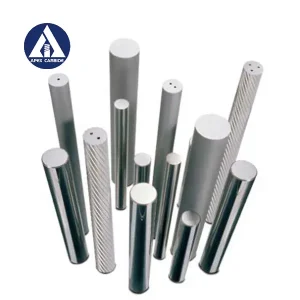
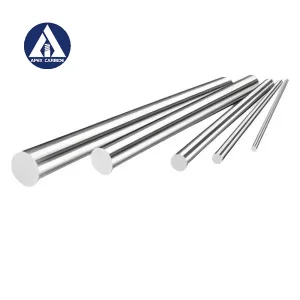
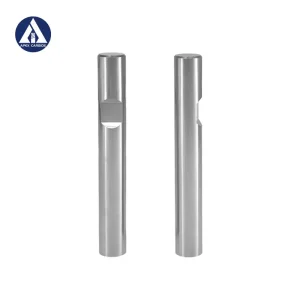
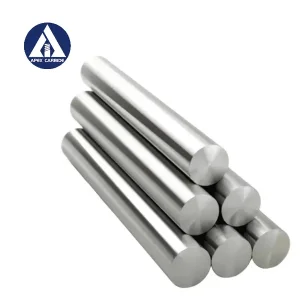
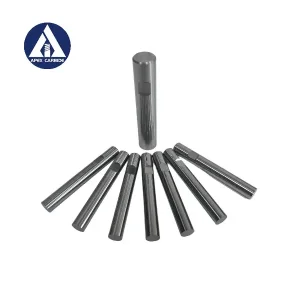
Solid Carbide Precision Rod Blanks: San Francisco Series 01
Engineered for direct consumption by Northern California cutting tool manufacturers, CNC regrinding facilities, and micro-tool designers.
China Factory 4.0: Metallurgical Mastery & Complete Supply Chain Resiliency
How end-to-end integration from raw tungsten ore processing to vacuum sinter-HIP densification insulates San Francisco tool producers against volatile global supply chain shocks.
Powder Synthesis & Doping
Our Jiangxi production centers leverage proprietary wet ball-milling and spray-drying towers. Controlled vanadium carbide (VC) and chromium carbide (Cr3C2) grain growth inhibitors prevent grain coalescence, yielding ultra-uniform 0.4 μm WC matrixes engineered for demanding heat loads.
60-Bar Sinter-HIP Densification
Unlike atmospheric vacuum furnaces, our computerized 60-bar overpressure sinter-HIP chambers subject the molten cobalt binder to uniform hydrostatic argon pressure at 1450°C. This guarantees total closure of micro-shrinkage pores and maximum TRS performance.
Sub-Micron Centerless Grinding
Equipped with high-precision CNC multi-station centerless grinding machines, every rod blank delivered to California clients achieves mirror-smooth finishes (Ra ≤ 0.2 μm) and exact h5/h6 tolerances, significantly reducing diamond grinding wheel wear at your facility.
Targeted Engineering Solutions for San Francisco's Key Sectors
Addressing specific thermodynamic and mechanical cutting challenges experienced by Bay Area production lines.
Silicon Valley Semiconductor Tooling & PCB Drilling
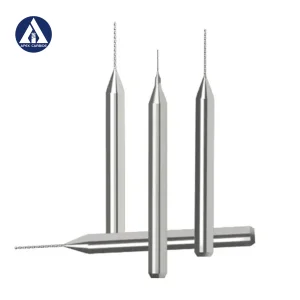
Advanced packaging, high-density interconnect (HDI) printed circuit boards, and quartz wafer carrier fixtures require micro-drills as thin as Ø0.05 mm. Standard carbide suffers from micro-bending deflection and catastrophic shear failures.
APEX’s specialized 6% and 8% Cobalt sub-micron rod blanks offer an ultra-high elastic modulus (up to 630 GPa), granting micro-drills outstanding rigidity. The result is perfectly cylindrical holes, minimal burr formation, and no subsurface delamination across multi-layer FR4, Rogers ceramic laminates, and PTFE boards.
Recommended Spec: Ultrafine Grain (0.4–0.6 μm), Cobalt 6%–8%, TRS > 4,200 MPa, Hardness ≥ 92.8 HRA.
Bay Area Aerospace & Defense Assemblies
San Francisco Peninsula and South Bay defense subcontractors routinely mill refractory aerospace alloys like Inconel 625, Monel, and 17-4 PH stainless steel. Our 10%–12% Cobalt high-toughness solid carbide rod blanks withstand cyclic thermal expansion and violent mechanical shock during aggressive pocketing cycles.
Seamless Supply Chain Execution Serving Northern California
Direct factory supply without the traditional trading house markups, reinforced by door-to-door delivery across San Francisco, Oakland, San Jose, and Silicon Valley machine hubs.
Full Regulatory & Traceability Compliance
Every rod batch arrives with full material certification: spectrometer chemical analysis, density validation (ASTM B311), Vickers hardness testing, and magnetic saturation monitoring. Our cobalt sourcing complies with strict international responsible minerals supply initiatives.
Air Express & West Coast Port Routing
For rapid-turn prototype requirements, stock rod shipments reach San Francisco International Airport (SFO) or Oakland International Airport (OAK) within 5–7 business days via DHL/FedEx priority. High-volume container orders transition via Port of Oakland for minimal overland drayage costs.
Direct Engineering Support Desk
Bypass brokers and generic importers. Bay Area CNC specialists communicate directly with APEX materials engineers. We evaluate your CAD tool geometry, target workpiece speeds & feeds, and propose optimum binder ratios and cut-to-length configurations.
Ready to Optimize Your San Francisco Tool Manufacturing Costs?
Request comprehensive grade datasheets, custom chamfer quotes, and trial blank packages today.
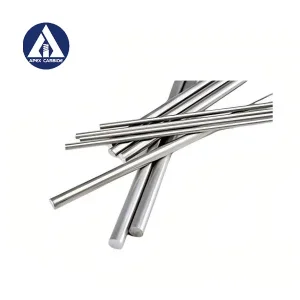
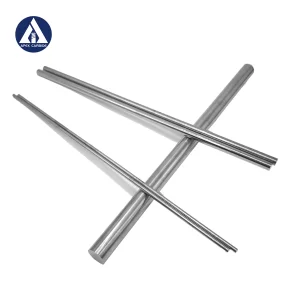
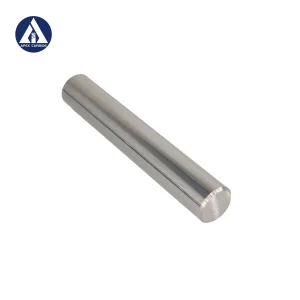
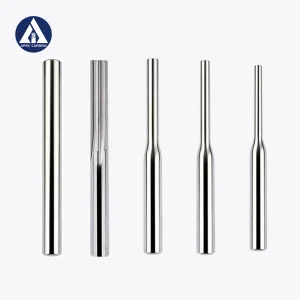
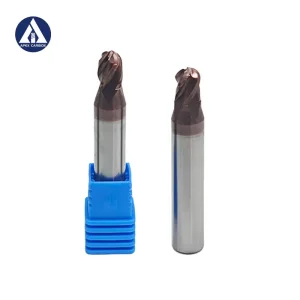
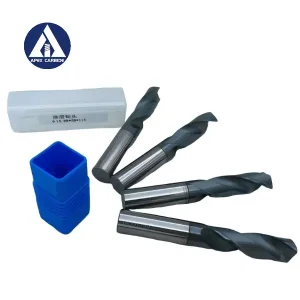
Solid Carbide Precision Rod Blanks: San Francisco Series 02
Comprehensive inventory covering standard unground round bars, precision ground blanks, PCB micro-drill bars, and high-performance custom tooling.
Solid Carbide Grade Engineering Matrix for Northern California Toolmakers
Selecting the ideal cobalt ratio and grain size to balance edge retention, thermal dissipation, and fracture resistance.
| APEX Grade | Cobalt (Co)% | Grain (μm) | Density (g/cm³) | Hardness (HRA) | TRS (MPa) | Optimal San Francisco Machining Application |
|---|---|---|---|---|---|---|
| APX-06U | 6.0% | 0.4–0.6 | 14.95 | 93.2 | 3,900 | Semiconductor graphite electrodes, ceramic composites, IC substrate micro-drills (≤Ø0.2mm). |
| APX-10S | 10.0% | 0.6–0.8 | 14.45 | 92.2 | 4,200 | Universal high-feed end mills for pre-hardened steels (up to 55 HRC), stainless 316L, and aerospace aluminum. |
| APX-12U | 12.0% | 0.4–0.6 | 14.25 | 92.5 | 4,400 | Extreme toughness for aerospace titanium Ti-6Al-4V, nickel superalloys, and interrupted roughing operations. |
| APX-15M | 15.0% | 1.0–1.6 | 14.00 | 89.5 | 3,700 | High-impact stamping dies, cold-heading punches, and extreme wear components in industrial automation. |
Frequently Asked Questions: Sourcing for the San Francisco Bay Area
Essential information for production managers, procurement officers, and machine tool grinding shops.