
Wholesale Solid Carbide Rods Supplier & Suppliers for United States
Delivering high-purity micrograin tungsten carbide rod blanks engineered for American precision tooling, aerospace machining, automotive component production, and PCB micro-drilling facilities.
High-Demand Solid Carbide Rods for the US Market
Centerless ground and sintered blanks produced to micro-tolerance h5/h6 parameters for 5-axis CNC tool manufacturing.
Commercial Realities: United States & Global Carbide Supply Chain
Navigating the balance between domestic re-shoring initiatives, supply security, raw material inflation, and ultra-high manufacturing throughput.
The United States Industrial Landscape
In the United States, the resurgence of high-tech manufacturing, aerospace development in hubs like the Pacific Northwest and Texas, and EV powertrain production throughout the Midwest have generated unprecedented demand for high-performance submicron and ultra-fine grain cemented carbide blanks. American machine shops and CNC cutting tool grinding facilities face severe supply chain crunches: domestic blank production is often cost-prohibitive or hampered by long, erratic backlogs. Sourcing reliable raw solid carbide rods from trusted primary manufacturers allows US tool fabricators to maintain competitive unit pricing while meeting tight delivery windows for critical aerospace and medical device clients.
Global Sourcing & China Factory Efficiency
Upstream control over ammonium paratungstate (APT) and tungsten carbide powder represents the bedrock of manufacturing resilience. Our integrated manufacturing base in Jiangxi leverages immediate access to premier tungsten ore reserves, combined with cutting-edge German extrusion systems and Japanese low-pressure Sinter-HIP furnaces. By managing the metallurgy from pure powder synthesis to automated centerless grinding, we eliminate multi-tier distributor markups, stabilize metallurgical variance, and insulate American purchasing departments against the severe price volatility prevalent across secondary distributor markets.
Precision Scenarios: Where APEX Rods Excel in US Production
Formulated to withstand extreme heat, heavy chip loads, and abrasive wear across specialized industries.
Aerospace Superalloys & Inconel
Fabrication of aerospace turbines and airframe components in California and Ohio requires extreme thermal hardness. Our submicron grain grades (0.6–0.8 µm) with 10–12% cobalt withstand high shear stresses and abrasive wear during high-speed milling of Inconel 718, Titanium Ti-6Al-4V, and heat-resistant stainless alloys.
Automotive & High-Volume EV Machining
Precision powertrain parts, transmission components, and lightweight cast aluminum engine casings demand long-run tool stability. Sinter-HIP carbide rods guarantee zero internal macro-porosity, reducing micro-chipping on cutting edges and ensuring continuous CNC uptime across multi-shift shifts in Midwest plants.
Semiconductor & PCB Micro-Drills
As Silicon Valley, Texas, and Arizona expand domestic semiconductor packaging, our ultra-fine grain blanks (0.2–0.4 µm) with extreme transverse rupture strength (TRS ≥ 4,300 MPa) provide the rigidity needed for micro-drills below 0.1 mm diameter, eliminating micro-deflection during IC substrate fabrication.
Standard Engineering Grades for US Toolmakers
Precision-tailored cobalt contents and microscopic grain structures designed to match specialized machining environments.
| Grade Classification | Cobalt Content (wt%) | Average WC Grain Size | Hardness (HRA) | TRS (MPa / PSI) | Primary Industrial Applications |
|---|---|---|---|---|---|
| APX-08UF (Ultra-Fine) | 8% Co | 0.4 – 0.6 µm | 92.8 – 93.3 | ≥ 4,200 MPa (609 ksi) | Hardened steel (up to 65 HRC), mold & die finishing, graphite machining. |
| APX-10MG (Micrograin) | 10% Co | 0.6 – 0.8 µm | 91.8 – 92.5 | ≥ 4,000 MPa (580 ksi) | Universal high-performance end mills and step drills for general steel, stainless, cast iron. |
| APX-12UF (Toughness Plus) | 12% Co | 0.5 – 0.7 µm | 91.5 – 92.0 | ≥ 4,350 MPa (630 ksi) | Heavy interrupted cuts, titanium, nickel superalloys, and structural aircraft parts. |
| APX-06F (Wear Resistant) | 6% Co | 0.8 – 1.0 µm | 93.0 – 93.8 | ≥ 3,500 MPa (507 ksi) | Non-ferrous materials, reinforced composites, abrasive wood routing, and wear guides. |
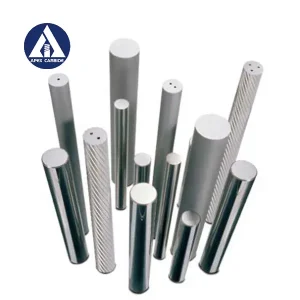
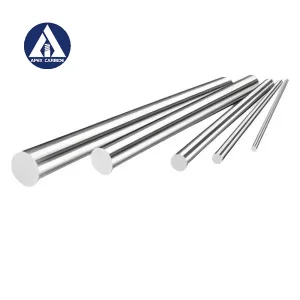
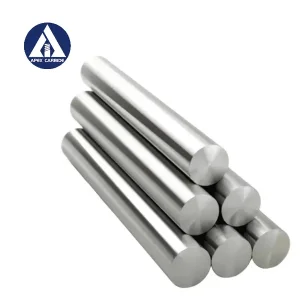
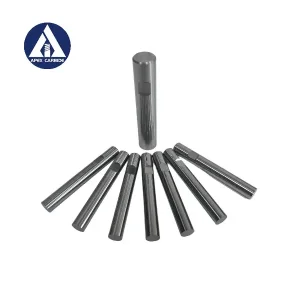
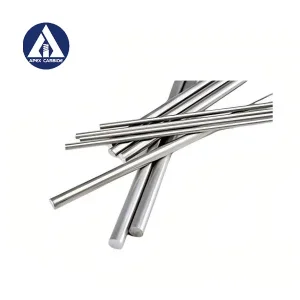
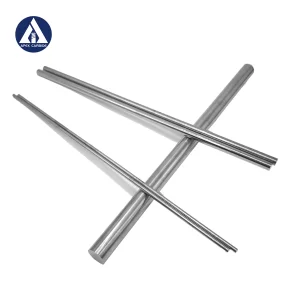
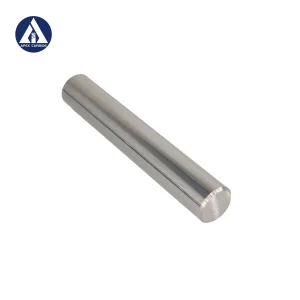
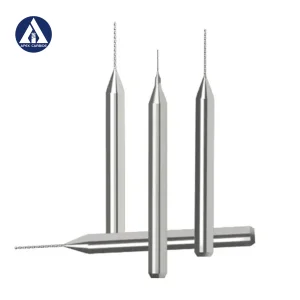
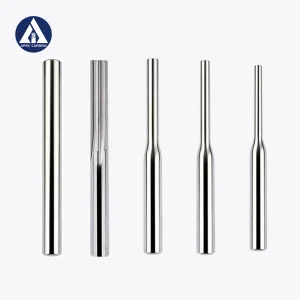
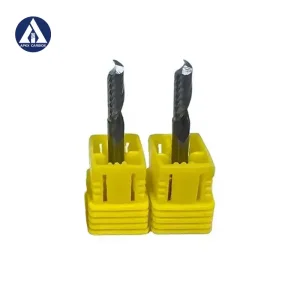
Comprehensive Tungsten Carbide Round Bar Inventory
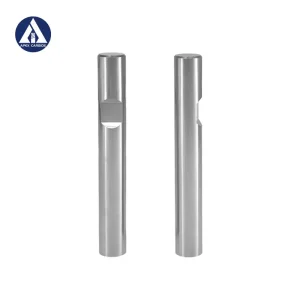
Available cut-to-length, chamfered, with Weldon flats, or as long 330 mm unground sintered blanks ready for high-precision grinding.
Emerging Industry Trends Shaping Carbide Procurement
Key technological and market shifts affecting tooling directors, OEM buyers, and supply chain managers.
Helical Coolant Channels Dominance
Tool performance in deep cavity milling and high-feed drilling is increasingly bottlenecked by chip evacuation and thermal dissipation. Sintering rods with twisted helical coolant ducts matching the tool's 30° or 45° helix eliminates manual EDM gun-drilling and quadruples tool lifespan in titanium milling operations.
Circular Economy & Scrap Recycling
Tungsten ore scarcity has driven procurement models toward sustainable circular sourcing. Tier-1 buyers in North America prioritize manufacturers capable of incorporating closed-loop zinc recovery and clean scrap reclaim processes to offset primary raw material extraction overheads without sacrificing grain boundary purity.
Sub-Micron Grain Boundary Control
Transitioning from sub-micron to true nano-grain cemented carbide (<0.2 µm) allows American precision machinists to process composite materials (CFRP) and pre-sintered ceramics. Tight grain boundary distribution prevents premature cobalt leaching under high coolant pressures.
Frequently Asked Questions: Sourcing Solid Carbide Rods
Clear, direct technical answers regarding testing, tolerance verification, logistics, and factory capabilities.