Engineered Carbide Slitting Discs & Tooling for Vietnam Industries
Precision-sintered tungsten carbide cutting solutions engineered for automated converting, lithium battery electrode slitting, and electronics machining across northern and southern industrial parks.
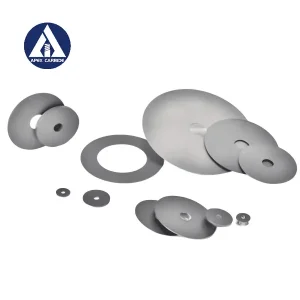
Wholesale Tungsten Carbide Discs & Cutting Discs for Vietnam Industrial Slitting Lines
Explore Product Specifications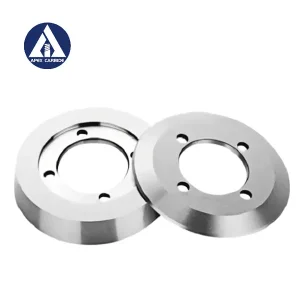
High-Precision Tungsten Carbide Circular Cutters & Rotary Knives for Vietnam Manufacturing
Explore Product Specifications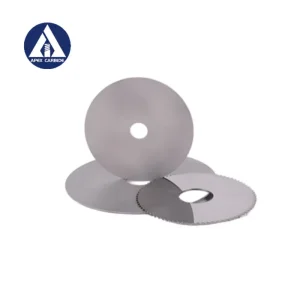
Custom Dimension Cemented Carbide Disc Blades for Vietnam Converting & Electronics Plants
Explore Product Specifications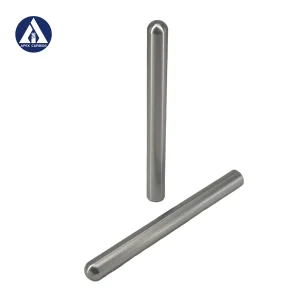
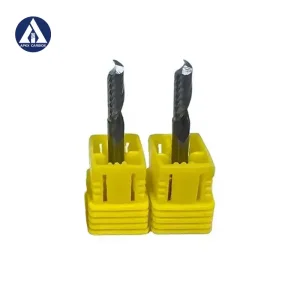
Preformed Ball Nose Carbide Blank Rods for Vietnam High-Precision Mold & Tool Making
Explore Product SpecificationsThe Vietnam Industrial Boom: Demand Dynamics for Ultra-Hard Tooling
Strategic supply chain reconfiguration across Southeast Asia has positioned Vietnam as an epicenter for advanced consumer electronics assembly, battery production, automotive engineering, and automated furniture milling.
Regional Manufacturing Hubs Driving Carbide Blade Sourcing
Over the past decade, the Socialist Republic of Vietnam has emerged as one of the most formidable industrial hubs in the Asia-Pacific region. Driven by large foreign direct investment (FDI) inflows, strategic geopolitical proximity to southern China, and free-trade pacts like the Regional Comprehensive Economic Partnership (RCEP), Vietnam has evolved beyond basic labor-intensive assembly into complex, high-precision industrial processing. Consequently, the national appetite for ultra-wear-resistant cutting tools—specifically tungsten carbide discs, circular slitting blades, and precision carbide blanks—has grown exponentially.
Geographically, demand is concentrated across three critical industrial corridors: Northern Vietnam (Bac Ninh, Bac Giang, Hai Phong, and Hanoi) anchors the world's highest density of mobile phone, printed circuit board (PCB), and consumer electronics production, led by conglomerates like Samsung, Foxconn, and Luxshare. In these facilities, tungsten carbide slitting knives and micro-drills operate around the clock to cut ultra-thin copper foil, aluminum laminate, and flexible printed circuit (FPC) materials without burrs.
In contrast, Southern Vietnam (Binh Duong, Dong Nai, Long An, and Ho Chi Minh City) represents the world's premier furniture, architectural timber, and packaging export base. Carbide saw blades engineered for cross-cutting abrasive tropical hardwoods, medium-density fiberboards (MDF), and multilayer corrugated cardboard must sustain severe thermal shocks while resisting premature edge chipping. Lastly, the Central Coast corridor (Da Nang, Quang Nam) is accelerating automotive component machining and textile fiber slitting, where tungsten carbide rotary knives deliver thousands of kilometers of continuous cutting without blade distortion.
Electronics & PCB Assembly
Ultra-fine grain carbide discs (0.4–0.6 µm) engineered for burr-free slitting of lithium battery separators, copper foils, and multi-layer HDI printed circuit boards in Bac Ninh and Bac Giang plants.
Woodworking & Forest Products
Heavy-duty carbide circular saw blades with anti-vibration laser cuts, designed specifically to tackle the silica-heavy teak, acacia, and rubberwood furniture exports from Binh Duong factories.
Packaging & Corrugated Slitting
Thin-kerf circular slitting knives operating at linear speeds exceeding 300 m/min, providing mirror-like edge finishes and eliminating dust on automated packaging lines across Dong Nai and Long An.
The International Cemented Carbide Landscape: Global Shift Toward Direct OEM Integration
Why international manufacturing groups operating in Southeast Asia are bypassing third-party trading intermediaries in favor of vertically integrated powder-to-tool Chinese carbide manufacturers.
Globally, the cemented carbide market is undergoing a seismic structural transformation. Historically dominated by European and Japanese legacy tooling giants, high-volume manufacturing sectors have faced severe margin pressure due to astronomical tooling costs, elongated lead times (often 12–20 weeks for customized rotary circular knives), and rigid minimum order volumes. At the same time, the fundamental chemistry and powder metallurgy processes of tungsten carbide (WC-Co) have matured substantially inside China, which controls over 80% of the world’s virgin tungsten concentrate resources.
Modern Chinese tier-1 carbide manufacturers, exemplified by Jiangxi Apex Carbide Co., Ltd., operate multi-axis computer-numeric-control (CNC) grinding facilities coupled with vacuum Sinter-HIP (Hot Isostatic Pressing) furnaces operating up to 10 MPa. This technological leap enables the mass manufacture of carbide discs and circular saw blades featuring micro-structural density greater than 99.98%, completely eliminating internal microscopic porosity, cobalt lakes, and structural micro-cracks that cause catastrophic blade rupture under aggressive operational feed rates.
| Performance Indicator | Legacy Western / Japanese Toolmakers | APEX Carbide (China Direct Factory) | Local Vietnam Small Machine Shops |
|---|---|---|---|
| Powder Sourcing & Traceability | Virgin APT, High Cost, Long Procurement Cycle | 100% In-House Virgin APT & WC Direct from Jiangxi Ore | Imported Scrap or Unverified Secondary Blanks |
| Sintering Technology | Sinter-HIP (High Quality, Extreme Price Premium) | Integrated Low-Pressure 10 MPa Sinter-HIP Technology | Standard Vacuum Sintering (Higher Micro-Porosity) |
| Custom Profile Lead Time | 8 to 16 Weeks | 7 to 15 Days (Rapid CNC CAD/CAM Mirror Grinding) | 3 to 4 Weeks (Dependent on imported blank stock) |
| Price-to-Performance Ratio | 1.0x (Standard Reference, High Brand Premium) | 2.8x – 3.5x More Cost-Effective Per Meter Cut | Variable Quality; Inconsistent Blade-to-Blade Life |
| Cross-Border Logistics to Vietnam | Air Freight: 7–10 Days; Ocean: 30+ Days | Land Cross-Border Trucking: 48–72h via Lang Son / Mong Cai | Domestic Delivery, but Constrained by Blank Stocks |
Engineered Application Scenarios Across Vietnam’s Production Lines
Optimizing cutting geometries, cobalt binder percentages, and edge preparation for specific high-stress cutting environments in Vietnamese industrial zones.
Lithium-Ion Battery Slitting
Workpiece: Anode copper foil (6–9 µm) & Cathode aluminum foil (10–15 µm).
Challenge: Edge burrs over 5 µm cause internal battery short-circuits.
Apex Solution: Sub-micron 0.5 µm WC grade with mirror-finished RA ≤ 0.05 µm, holding burr heights strictly below 2 µm over 40,000 meters of continuous slitting.
Abrasive Tropical Hardwood Milling
Workpiece: Kiln-dried acacia, rubberwood, and laminated MDF panels.
Challenge: Severe abrasion from internal mineral silica and resin adhesives.
Apex Solution: Micro-grain carbide circular saw blades with custom rake angles (+15° to +20°) and chrome-nitride PVD barrier coatings preventing chemical resin adhesion.
High-Speed Corrugated Cardboard Slitting
Workpiece: 3-ply, 5-ply, and heavy 7-ply virgin kraft packaging boards.
Challenge: Blade heat buildup causes paper edge scorching and ragged tears.
Apex Solution: Thin-kerf cemented carbide rotary razor blades (0.8–1.3 mm thickness) treated via cryogenic stress-relief to guarantee zero thermal warping under high friction.
Why Chinese Powder Metallurgy Delivers Unrivaled Resilience & Speed
Examining the vertical integration from ammonium paratungstate (APT) synthesis to five-axis CNC diamond wheel grinding that powers our Vietnam export operations.
The resilience of modern industrial manufacturing hinges entirely on upstream supply chain security. For Vietnamese manufacturers relying on continuous slitting and sawing operations, tooling stockouts or inconsistent powder batches can halt multimillion-dollar assembly plants. Sourcing directly from Jiangxi Apex Carbide Co., Ltd. eliminates international middleman risk through deep vertical integration:
Raw Material Hegemony & In-House Powder Processing
Jiangxi Province is widely recognized as the tungsten capital of the world. By maintaining direct integration with native ammonium paratungstate (APT) refineries and thermal reduction furnaces, APEX Carbide governs powder purity from 99.95% tungsten trioxide down to sub-micron tungsten carbide powder with precise Fischer sub-sieve sizer (FSSS) control. This shields our Vietnam customers from global commodity price spikes and ensures batch-to-batch chemical identicality.
Ultra-High-Pressure 10 MPa Sinter-HIP Densification
Traditional hydrogen vacuum sintering frequently leaves microscopic voids that act as stress concentration focal points during high-velocity rotary slitting. APEX employs computer-controlled Sinter-HIP integrated furnaces. Operating under 100 atmospheres of ultra-pure argon pressure at 1,450°C, the cobalt binder flows freely to achieve near-theoretical density (14.6–15.1 g/cm³ depending on grade), virtually eliminating micro-flaws and delivering unmatched transverse rupture strength (TRS ≥ 3,800 MPa).
Mirror-Finish Multi-Axis CNC Rotary Diamond Grinding
Carbide disc cutting edges require precise geometry: bevel angle, hone radius, and face run-out dictate whether a blade cuts cleanly or creates microscopic edge burrs. Utilizing Swiss-imported Agathon, Walter, and Rollomatic grinding centers equipped with resin-bonded and hybrid diamond wheels, our factories achieve disc surface roughness values down to Ra 0.05 µm, total indicated runout (TIR) within 0.002 mm, and cutting edge waviness under 0.0015 mm.
Border-Adjacent Logistics & RCEP Tariff Efficiency
Geographic proximity between southern China and Vietnam delivers an unrivaled logistic velocity. Using dedicated bonded truck corridors through the Lang Son (Huu Nghi) and Quang Ninh (Mong Cai) border gates, air-cleared or express land cargo reaches industrial zones in Bac Ninh, Thai Nguyen, or Hai Phong within 48 to 72 hours from factory dispatch. Furthermore, under the ASEAN-China Free Trade Area (ACFTA) and RCEP, our exports qualify for Form E Certificate of Origin, enabling Vietnamese importers to enjoy 0% preferential import tariffs on cemented carbide cutting tools.
Technology Roadmap: The Next Decade of Industrial Tungsten Carbide
Anticipating emerging requirements in ultra-thin battery separator cutting, nano-grain WC powders, and environmentally circular carbide recycling.
Nano-Grain WC Matrices (< 0.2 µm)
By pairing high-energy planetary ball milling with specialized grain-growth inhibitors such as vanadium carbide (VC) and chromium carbide (Cr₃C₂), our lab has commercialized nano-grain carbide formulations yielding hardness ratings exceeding 94.5 HRA alongside superior toughness.
Multilayer High-Entropy PVD Coatings
For demanding abrasive wood cutting and metal grooving, our blades feature state-of-the-art nanocomposite coatings (AlTiN, TiSiN, and Diamond-Like Carbon DLC). These coatings create an impenetrable thermal barrier capable of withstanding cutting temperatures above 1,100°C without oxidation.
Closed-Loop Zinc Process Recycling
Committed to global ESG standards and ISO 14001 compliance, APEX has installed an industrial zinc recovery reclamation system. We collect end-of-life carbide discs from our partner factories in Vietnam, chemically extracting virgin-grade WC powder and reducing carbon footprint by 65%.
Compliance, Rigorous Inspection Protocols & Local Technical Support
Every shipment to Vietnamese manufacturing sites undergoes 100% optical coordinate inspection, certified chemical metallurgy testing, and complete batch traceability.
To satisfy the stringent quality gates of Fortune 500 electronics and automotive suppliers operating across Vietnam, APEX Carbide enforces a four-tiered inspection regimen before any consignment leaves our factories:
| Inspection Stage | Testing Parameter | Laboratory Equipment | Standard Compliance |
|---|---|---|---|
| Metallurgical Verification | Cobalt Magnetic Saturation, Coercivity (Hc), Micro-Porosity | Foerster Koerzimat, Saturated Magnetometer, Metallurgical Microscope | ISO 3326 / ASTM B886 |
| Mechanical Hardness & TRS | Rockwell Hardness (HRA), Transverse Rupture Strength (TRS) | Instron Universal Mechanical Tester, Wilson Rockwell Hardness Tester | ISO 3738 / ISO 3327 |
| Dimensional Geometry | Outer Diameter, Bore Tolerance (H7), Blade Thickness, Parallelism | Zeiss 3D Coordinate Measuring Machine (CMM), Mahr Inductive Gauge | DIN ISO 286 / JIS B0401 |
| Edge Micro-Topography | Cutting Edge Radius, Waviness, Mirror Roughness (Ra/Rz) | Keyence VHX-7000 Digital 4K Microscope, Taylor Hobson Profilometer | ISO 4287 Surface Texture |
Regulatory Compliance & Import Documentation for Vietnam: All our carbide discs, cutting tools, and saw blades are fully certified compliant with RoHS 3 (Directive 2015/863) and REACH (EC 1907/2006), containing zero restricted hazardous substances or conflict minerals. Every shipment is accompanied by a full Chemical Composition Inspection Certificate (COA), Dimension Inspection Sheet, and authenticated Form E Certificate of Origin signed by authorized Chinese inspection authorities, allowing our Vietnamese clients frictionless customs clearance and immediate duty exemptions.
Frequently Asked Questions: Sourcing Carbide Discs for Vietnam
Detailed answers covering order minimums, custom blueprint grinding, lead times, border customs clearance, and grade selection.
Comprehensive Tungsten Carbide Solid Tooling, Rods & End Mills
Explore our full vertically integrated catalog supporting Vietnam's CNC machining centers, micro-drill makers, and precision tool grinding facilities.
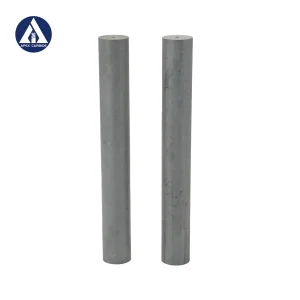
Unground Sintered Carbide Round Rod Blanks with Axial Coolant Hole for Vietnam Drill Makers
Explore Product Specifications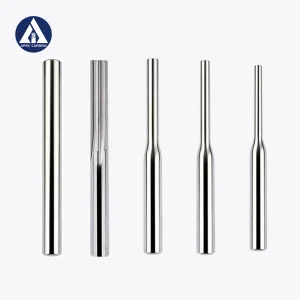
High-Purity Carbide Round Bar Blanks for IC Substrate & HDI PCB Micro Drills in Vietnam
Explore Product Specifications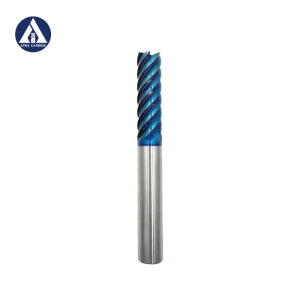
High-Efficiency 6-Flute Solid Carbide Flat End Mills with NaNo Blue Coating for Vietnam CNC Mills
Explore Product Specifications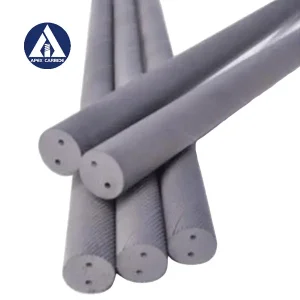
Carbide Rods with Two Helical Coolant Holes (30°/40°), h5 Ground for Vietnam Toolmakers
Explore Product Specifications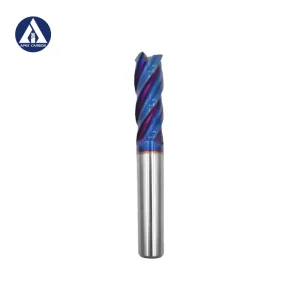
Ultra-Hard 65 HRC Solid Carbide Milling Cutters with NaNo Blue Coating for Vietnam Mold Machining
Explore Product Specifications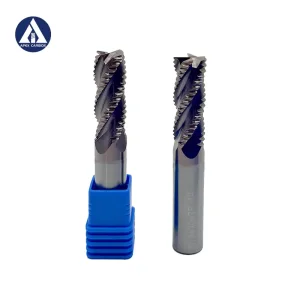
Heavy-Duty 4-Flute Straight Shank Carbide Roughing End Mills with TiAlN Coating for Vietnam Workshops
Explore Product Specifications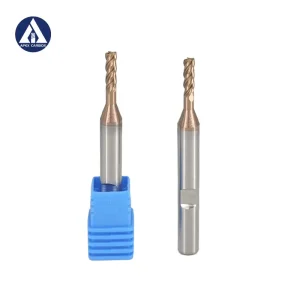
Versatile 4-Flute Flat End Mills with Weldon Shank for Vietnam Industrial Precision CNC Milling
Explore Product Specifications