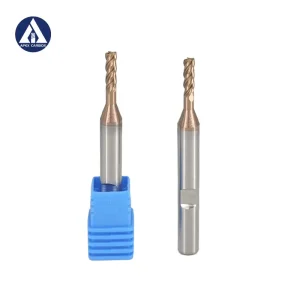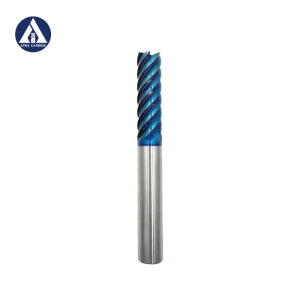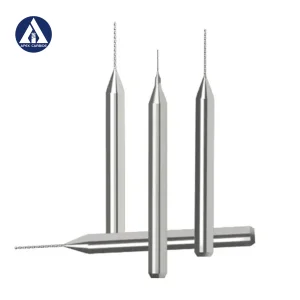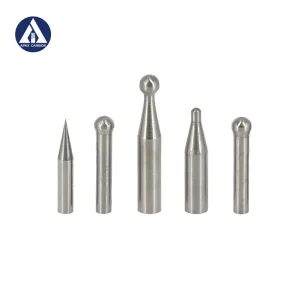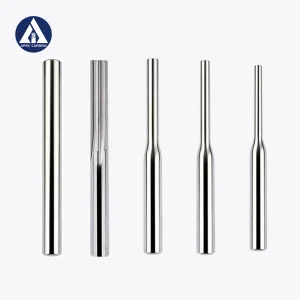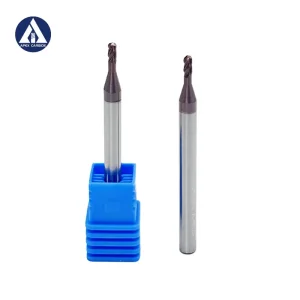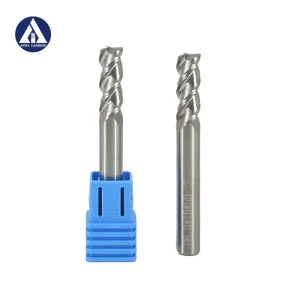
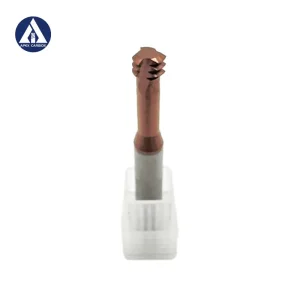
Top-Tier Tooling Inventory
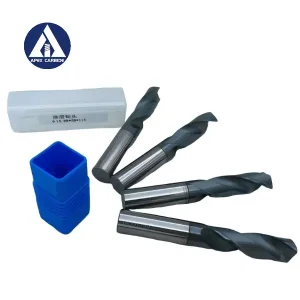
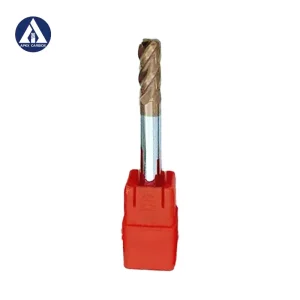
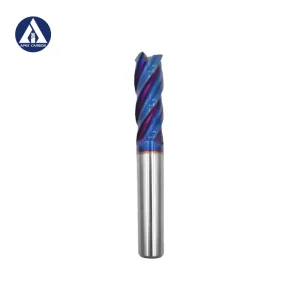
High-Performance Custom Milling & Sintered Stock
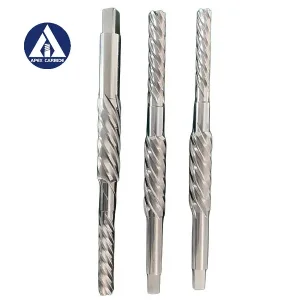
Direct supply from specialized Chinese production facilities, meeting sub-micron concentricity and precision tolerances for extreme machining environments.
Global Industrial Landscape
The Global Strategic Need for Customized Carbide Parts
How hyper-demanding operating environments in semiconductor, aerospace, and energy sectors are shifting procurement away from standard catalog items.
Severe Wear & Friction Mitigation
Standard tool-grade alloys frequently suffer thermal cracking, severe adhesive degradation, and abrasive mechanical wear under cyclic dynamic stress. Customized tungsten carbide (WC-Co) formulations, enriched with tailored grain-inhibiting complexes such as Vanadium Carbide (VC) and Chromium Carbide (Cr3C2), yield specialized hardness beyond 92.5 HRA alongside enhanced fracture toughness.
Semiconductor & Micro-Drilling
The acceleration of High-Density Interconnect (HDI) circuit architectures and IC substrate micro-hole processing requires drilling tools engineered from ultrafine sub-micron grain structures (0.2–0.5 µm). Standard sintered materials display excessive micro-chipping, mandating tailored preforms ground to h5 runout tolerances that prevent high-RPM tool deflection.
Aggressive Chemical & Thermal Regimes
Conventional cobalt-bonded carbides quickly succumb to electrochemical leaching when deployed in offshore downhole flow valves, oil-and-gas chokes, and subsea metering pumps. Custom sintering facilities engineer cobalt-nickel-chromium binders that achieve high structural stability in low pH conditions, high temperature, and saline environments.
300%
Extended Component Tool-Life
±0.002mm
Ultra-Precision Grinding Runout
60 Bar
Low-Pressure Sinter-HIP Consolidation
100%
Non-Destructive Ultrasonic Verification
Macro Industry Solutions
Cross-Sector Applications for Precision Customized Blanks
How vertically integrated Chinese factories solve critical operational bottlenecks across demanding global manufacturing sectors.
Aerospace & Superalloy Machining
Processing Nickel-based superalloys (Inconel 718) and titanium aerospace forgings produces intense mechanical friction and thermal build-up. Chinese custom manufacturers integrate internal helical coolant channels matching flute geometries, drastically decreasing edge temperatures while optimizing chip evacuation.
Electronics & Stamping Dies
Progressive stamping dies for lead frames, EV battery terminal tabs, and micro-connectors require extraordinary compressive resistance coupled with impact stamina. Sub-micron grades processed via high-pressure hot isostatic pressing prevent micro-spalling during billions of continuous punching impacts.
Mining, Tunneling & Wear Protection
From heavy-duty road milling teeth to directional drill nozzles, severe abrasion combined with high percussive shock quickly degrades ordinary tooling steel. Customized macro-grain tungsten carbide buttons and preforms deliver high transverse rupture strength, minimizing expensive downtime.
Material Science Matrix
Tungsten Carbide Metallurgical Grades & Specification Matrix
Standard industry parameters for selecting optimal cobalt fractions and grain sizes based on mechanical wear profile and operating loads.
| Grade Designation | Cobalt Content (%) | Grain Size (µm) | Density (g/cm³) | Hardness (HRA) | TRS (MPa) | Primary Industrial Field |
|---|---|---|---|---|---|---|
| AX-U06 (Ultra-Fine) | 6.0% | 0.4 – 0.6 | 14.95 | 93.5 | 3800 | PCB Micro Drills, Hard Milling (>60 HRC), Optical Mold Inserts |
| AX-S08 (Sub-Micron) | 8.0% | 0.6 – 0.8 | 14.70 | 92.6 | 4000 | Aerospace Composites, Titanium Finishing, End Mills |
| AX-G10 (General) | 10.0% | 0.8 – 1.0 | 14.45 | 91.8 | 4200 | General Tooling, Thread Mills, Coolant-Hole Drill Blanks |
| AX-T12 (Toughness) | 12.0% | 1.0 – 1.4 | 14.25 | 90.5 | 4400 | Interrupted Roughing, Heavy Stamping Punches, Saw Tips |
| AX-W15 (Wear/Impact) | 15.0% | 1.4 – 2.0 | 13.95 | 88.5 | 4600 | Cold Heading Dies, Fluid Nozzles, Mining Rock Inserts |
Manufacturing Roadmap
Engineering Lifecycle of Customized Carbide Parts
A closed-loop quality assurance pipeline from virgin ammonium paratungstate powder to sub-micron optical metrology verification.
01
Powder Metallurgy
High-purity virgin tungsten powder formulation with ball-milling homogenizing cycles, ensuring controlled distribution of cobalt and anti-grain growth dopants.
02
Hydraulic Consolidation
Uniaxial die pressing, automatic wet bag isostatic pressing (CIP), or high-pressure plastic extrusion for continuous helical or straight coolant channels.
03
Overpressure Sinter-HIP
Combined vacuum thermal sintering and high-pressure argon gas hot isostatic pressing (60-100 bar) to achieve zero internal micro-porosity.
04
Precision CNC Machining
High-rigidity centerless grinding, precision wire EDM slicing, end chamfering, and customized PVD nano-composite thermal barrier coating.
Global Compliance & Quality
Export Standards, Audits & Supply Chain Traceability
Robust operational controls and metallurgical traceability matching Western enterprise procurement standards.
Metallurgical Traceability
Every single batch of customized carbide parts leaves the manufacturing plant accompanied by a comprehensive EN 10204 Type 3.1 inspection certificate, detailing certified chemical composition, magnetic saturation (4πσ), coercive force (Hc), and Transverse Rupture Strength.
ISO 9001:2015 & Environmental Systems
Modern Chinese carbide factories operate under strict environmental and quality management systems. Automated optical profilometry and non-destructive ultrasonic immersion testing screen out hairline voids, surface inclusions, and internal stress gradients prior to final export packing.
Secure Logistics & Custom Tariffs
Handling international shipping requires tailored protective oiling, vacuum-sealed packaging, and vibration-dampened casing for fragile ultra-hard tools. Direct factory teams streamline HS Code classification (8209.00 / 8207.70), clearing export hurdles across North America, the EU, and East Asia.
Procurement Knowledge Base
Frequently Asked Questions by Industrial Sourcing Teams
Actionable clarity on tolerances, sample trials, grain physics, and commercial agreements directly from our engineering desks.
What is the standard turnaround time for custom preforms?
Standard custom sintering cycles for near-net-shape blanks run between 10 to 18 business days from final 2D/3D CAD drawing approval. Expedited sampling lines support critical pilot programs within 7 calendar days, enabling quick qualification before mass batch scaling.
How do you guarantee sub-micron grain integrity?
We combine high-energy horizontal ball-milling with tightly calculated Vanadium Carbide (VC) and Chromium Carbide (Cr3C2) grain growth inhibitors. Sintering in computerized low-pressure Sinter-HIP furnaces guarantees uniform cobalt distribution without localized grain pooling.
What machining tolerances can your grinding shops hold?
Centerless cylindrical grinding holds shank diameters reliably to ISO h6, h5, and down to -0.002 mm upon explicit engineering request. High-precision surface grinding and wire EDM profiles achieve dimensional repeatability within ±0.005 mm and surface finishes down to Ra 0.05 µm.
Can you provide small-batch trial runs prior to large volumes?
Yes. We support trial orders starting from 1 to 5 pieces for dimensional fit and tool-life field testing. Once validation on customer CNC and stamping machinery is confirmed, commercial volume escalates seamlessly with locked chemical tolerances.
Specialized Blanks & High-Run Tooling
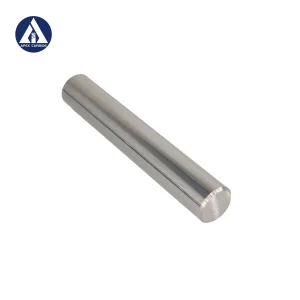
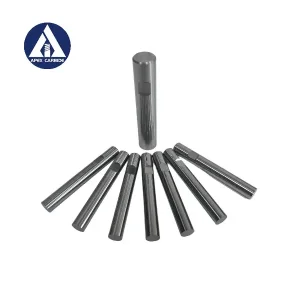
Precision Ground Rod Blanks & Micro-Drill Stock
Explore our secondary lineup of precision-ground blanks, micro-grain round bars, and high-performance CNC machining solutions ready for immediate custom configuration.