Precision Portfolio
High-Efficiency Carbide Solutions & Finished Tooling
Direct supply from manufacturing lines: ultra-fine grain tungsten substrate engineered for zero edge built-up (BUE), extreme chip extraction, and micro-inch surface finishes.
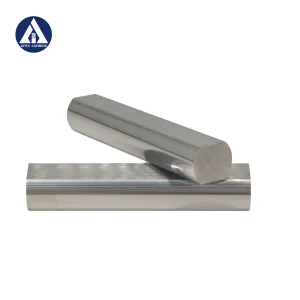
China Solid Carbide Round Blank with Two Weldon Flats, Pre-Ground Cemented Tungsten Carbide Rod Blank for CNC Cutting Tool Manufacturing Manufacturer, Supplier
View Specification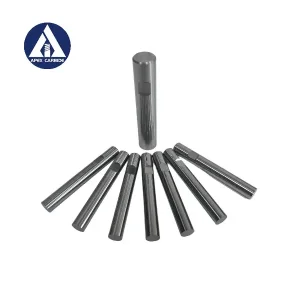
China Cemented Carbide Round Bars with Weldon from China Manufacture Manufacturers, Factories
View Specification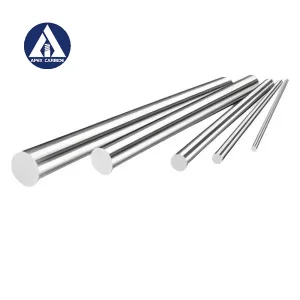
Wholesale High Quality Tungsten Solid Carbide Rod with Ground or Unground Manufacturer, Supplier
View Specification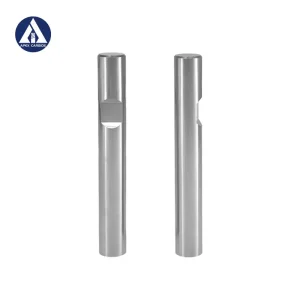
Wholesale Tungsten solid carbide rods with customized weldon and h5 ground and chamfered Manufacturers, Supplier
View Specification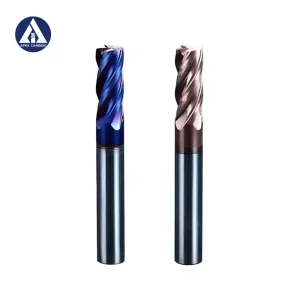
Wholesale Tungsten Solid Carbide End Mill with High Quality from China Factory Manufacturer, Factories
View Specification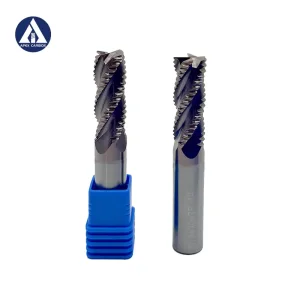
China 4 Flute Straight Shank Carbide Roughing End Mill with TiALN Coating Manufacturer, Supplier
View Specification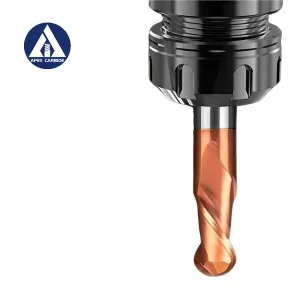
Wholesale 55 HRC TiSiN Nano coated ball nose end mill with 2 flutes Suppliers, Factories
View Specification
Industry Intelligence
Macro Dynamics & Aluminum Machining Evolution
The transition toward light-weighting in e-mobility, aerospace monolithic frames, and semiconductor consumer electronics dictates higher shear, minimal friction, and exceptional thermal stability.
Alloy Shifts: 7000-Series & Al-Li
Structural aerospace structural parts and EV battery enclosures rely heavily on AA7075-T6 and emerging aluminum-lithium formulations. Machining these requires sharper cutting wedges and low-cobalt (6%) micro-grain substrates to resist adhesive wear without chemical interaction.
- Elimination of micro-welding via mirror-polished rake faces (Ra < 0.05 µm)
- Optimized clearance angles preventing flank rubbing
- Submicron WC particle matrix resisting catastrophic flaking
Dry & MQL High-Speed Milling
Environmental standards and production cost initiatives are driving Minimum Quantity Lubrication (MQL) and dry cutting protocols. Inserts and cutters must survive cutting zone temperatures exceeding 450°C without plastic deformation of the binder phase.
- TaC / NbC grain-growth inhibitors for hot hardness
- DLC (Diamond-Like Carbon) and rainbow multilayer coatings
- Chipbreaker contours designed for instantaneous ribbon curling
Monolithic Machining & Thin Walls
Aviation and 3C manufacturing mandate the machining of complex webs and floor thicknesses down to 0.8 mm. Low cutting forces are strictly mandatory to avoid chatter vibration and workpiece deflection.
- Up to 25° high positive rake angle geometry
- Honed or polished, burr-free razor cutting edges
- Ultra-high concentricity (< 0.003 mm runout) on blanks and end mills
Material Engineering
Standardized Sintered Carbide Specifications for Aluminum
Selecting the optimal substrate-to-geometry matrix is critical for high metal removal rates (MRR) and repeatable batch consistency. APEX controls WC powder formulation from atomization to final sinter-HIP.
| Grade Spec | Cobalt (Co) % | Grain Size (µm) | Hardness (HRA) | TRS (MPa) | Primary Aluminum Machining Match |
|---|---|---|---|---|---|
| APX-AL06 | 6.0% | 0.8 (Fine) | 92.8 - 93.2 | ≥ 3800 | Cast Al-Si alloys (>12% Si), high-abrasion non-ferrous, structural turning |
| APX-AL10 | 10.0% | 0.6 - 0.8 (Submicron) | 91.8 - 92.4 | ≥ 4100 | Wrought Aluminum (6061, 7075), high-speed finishing reamers, custom drills |
| APX-UF12 | 12.0% | 0.4 - 0.6 (Ultra-fine) | 92.2 - 92.6 | ≥ 4300 | Heavy interrupted cuts, thin-rib pocket roughing, unstable clamping setups |
| APX-CT08 | 8.0% | 0.7 (Submicron) | 92.4 - 92.8 | ≥ 4000 | Mirror-finishing diamond-coated substrates, electronics frame milling |
BUE Inhibition Mechanics
Aluminum has strong chemical affinity for iron and cobalt at high shear zones. By reducing surface cobalt exposure on cutting rakes and utilizing specialized high-purity tungsten carbides, APEX blanks completely mitigate Built-Up Edge formation.
Sinter-HIP Porosity Control
Operating under 100-bar argon pressure cycles at 1450°C, our Sinter-HIP process eliminates internal micro-voids (A00, B00 rating). This delivers pristine micro-edges that can be ground to sub-micron sharpness without edge notch fractures.
Rigid Tolerance Grinding
Equipped with Agathon, Rollomatic, and centerless production cells, APEX blanks hold external diameter runout under 0.002 mm, enabling tier-1 tooling houses to produce high-performance finished drills, reamers, and profile tools without prep stock waste.
Strategic Architecture
End-to-End Enterprise OEM/ODM Ecosystem
APEX Carbide integrates complete process chains for worldwide distributors, automotive suppliers, and aerospace fabricators. We satisfy strict compliance benchmarks, ensuring reliable lead times and predictable batch qualities.
Global Quality Compliance
All batches are inspected via metallographic microscope analysis, saturation magnetization (Cobalt magnetics), and coercive force (Hc) testing. Full traceability certificates (MTR) accompany every export consignment.
- ISO 9001:2015 certified production lines
- Conflict-free Tungsten raw material sourcing policy
- Full RoHS and REACH compliant processing parameters
Supply Chain Security
We mitigate international commodity price shocks by maintaining strategic reserves of refined Ammonium Paratungstate (APT). Guaranteed monthly container allocation ensures smooth supply for multi-facility plants.
- Standardized 7–25 day lead time delivery schedule
- Buffer stock agreements for long-term supply partners
- Consolidated sea/air logistics packaging protecting precision ground rods
Direct Engineering Desk
Collaborate directly with our 200+ technical specialist staff in Nanchang. From custom CAD/CAM drawings to trial samples for specific chip pocket profiles, we reduce trial iteration time by 60%.
- Bilingual technical support desk (UTC+8 English/Chinese)
- Rapid prototyping with low MOQ from 1 piece
- Custom coolant-channel design (Straight and 30°/40° twin helix)
Engineered Inventory
Precision Rod Blanks, Form Tools & High-Speed Cutters
High-tolerance sintered cylindrical blanks, preformed rod ends, and specialty end mills designed for direct implementation in modern CNC machining centers.
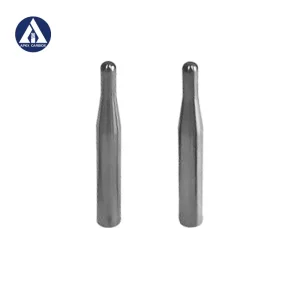
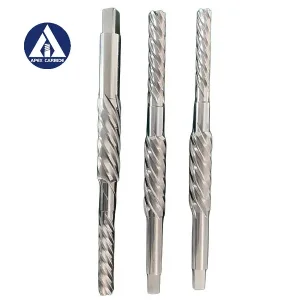
China Preformed Solid Carbide Rods as per Customers' Drawings Suppliers, Factories
View Specification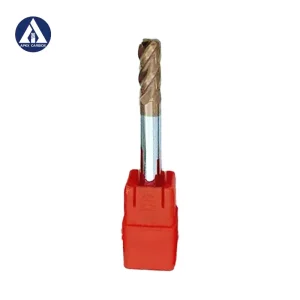
Wholesale HRC55 High Performance Solid Carbide Milling Cutter Manufacturers, Supplier
View Specification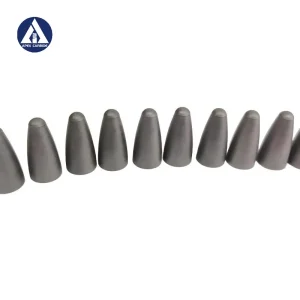
China Tungsten Solid Carbide Rotary Burr Blank Supplier, Factories
View Specification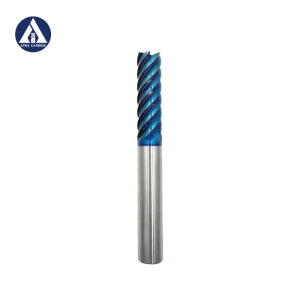
Wholesale Flat End Mill 6 Flutes Straight Shank with NaNo Blue Coating Supplier, Suppliers
View Specification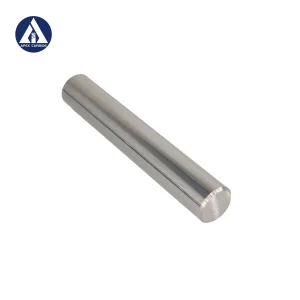
Wholesale Unground Sintered Carbide Rod Blank 330mm Long, Cemented Tungsten Carbide Round Bar for End Mill & Drill Bit Raw Material Supplier, Suppliers
View Specification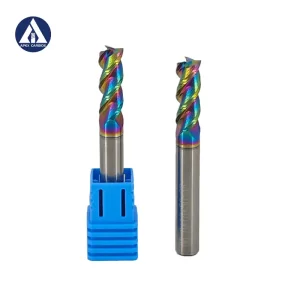
Wholesale Tungsten Carbide End Mills for Alumius with Multi-Colored Coating Manufacturer, Suppliers
View Specification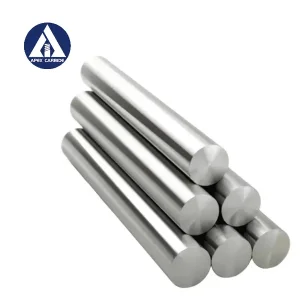
China Tungsten Solid Carbide Rods for End Mills and Drills with stable high quality from China Factory, Factories
View Specification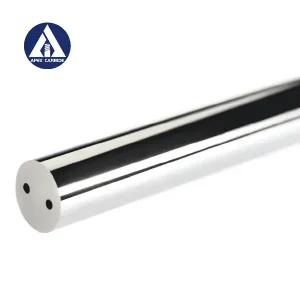
China Tungsten Carbide Rods with one or two Straight Coolant holes in blank or h5 ground Manufacturers, Suppliers
View Specification
Forward Engineering
Next-Generation Technology Roadmap
Continuous investment in powder refinement, nanostructured grain configurations, and sustainable recycling systems keeps APEX partners ahead of global manufacturing challenges.
Additive Carbide Manufacturing
Developing near-net-shape binder-jetting 3D printing of complex internal conformal cooling paths for drills and milling cutters, achieving cooling rates up to 40% higher than conventional extrusion channels.
Nanocrystalline WC-Co
Field trials of WC grain sizes below 0.2 µm combined with alternative binders (Ni-Cr-Mo) to replace Cobalt, improving chemical neutrality when machining abrasive high-copper aluminum and MMC matrix components.
Closed-Loop Circularity
Full implementation of eco-friendly zinc recycling processes that recover 100% of tungsten carbide scrap into battery-grade and tooling-grade powder, reducing virgin carbon footprint by 75%.
Technical FAQ
Frequently Asked Questions on Aluminum Inserts & Tool Blanks
Key technical and procurement insights addressed by our senior cutting application and metallurgical team.
Why is a submicron unground or polished carbide substrate superior for aluminum?
Aluminum exhibits high ductility and tends to cold-weld to cutting edges under friction. A submicron substrate allows toolmakers to grind an extremely sharp wedge with razor-sharp integrity (edge radius < 5 µm). Combined with mirror-polished surfaces, this lowers the coefficient of friction and prevents Built-Up Edge (BUE), yielding exceptional surface finishes and lower power consumption.
What is the recommended cobalt content for high-silicon cast aluminum?
For high-silicon cast aluminum (such as A380 or A390 containing 9% to 18% Si), abrasive silicon particles cause rapid flank wear. A low-cobalt grade (6% Co, e.g., APX-AL06) with higher hardness (~92.8-93.2 HRA) is strongly recommended over standard 10% or 12% grades to prevent abrasive binder washout.
What are the dimensional tolerances for your ground carbide rods and tool blanks?
Standard precision-ground rods are manufactured to h6 and h5 diameter tolerances (e.g., -0.005 mm to -0.008 mm). We also offer custom diameter grinding down to ±0.002 mm, pre-formed sphere ends, single or dual Weldon clamping flats, and chamfered tips ready for direct 5-axis CNC flute grinding.
What is your typical production turnaround and sample policy?
We support low-volume trial orders starting from 1 piece for standard sizes. Prototype custom blanks based on engineering drawings typically ship in 7 to 10 working days. Large batch production and wholesale export contracts are delivered within 15 to 25 days via integrated logistics partners.
Can APEX supply internal coolant rods for aluminum deep hole drills?
Yes. We produce both single straight central coolant hole rods and dual helical coolant channels (standard 30° and 40° helix angles). These internal channels deliver high-pressure cutting fluid directly to the chisel edge, ensuring immediate chip clearing in deep cavity machining.