
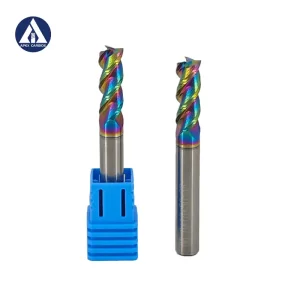
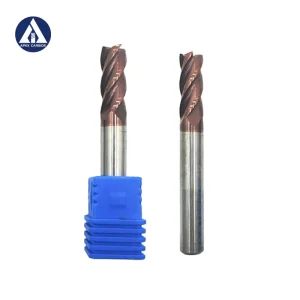
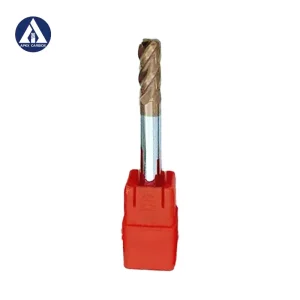
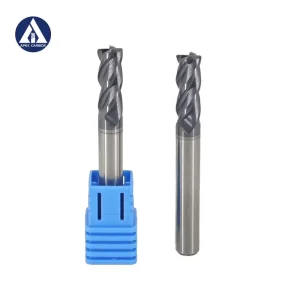
Tungsten Carbide End Mills for Alumius (Multi-Colored Coating)
View Specifications
Explore standard, micro-grain, and specialized ultra-fine cemented tungsten carbide rods, blanks, and milling systems with guaranteed h5/h6 tolerances for high-reliability drilling operations.
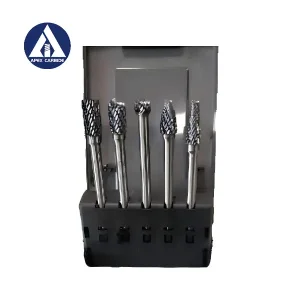
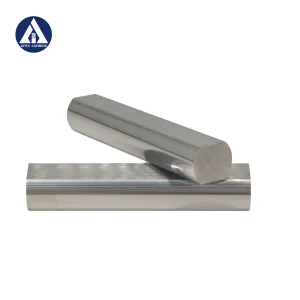
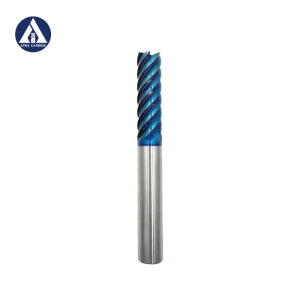
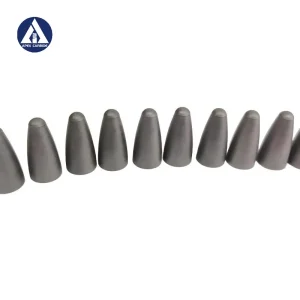
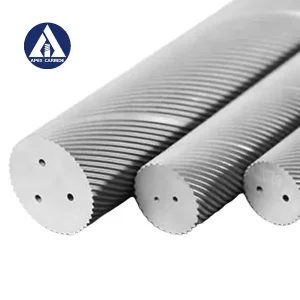
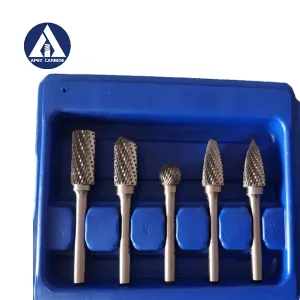
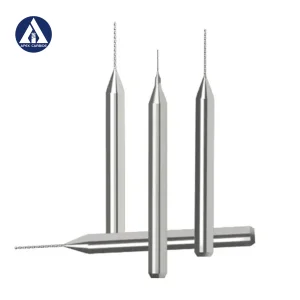
As microvia aspect ratios climb and high-frequency materials such as PTFE and high-Tg FR-4 dominate electronic design, the physical demands on wholesale PCB drill rods have shifted drastically.
Modern micro-drills (operating from 0.05mm to 0.30mm diameters) demand tungsten carbide grain structures below 0.4μm. APEX integrates precise grain growth inhibitors (VC, Cr3C2) to eliminate structural embrittlement, yielding Transverse Rupture Strength (TRS) exceeding 4,200 MPa.
Micro-drilling under spindle speeds upwards of 250,000 to 300,000 RPM exposes drill shanks to destructive radial deflection. By achieving Young's Modulus values of 620–650 GPa, APEX drill rod blanks preserve exceptional runout concentricity (TIR < 0.002 mm).
Porosity defects at the sub-micron scale are the leading cause of premature drill bit snap during deep multi-layer laminate penetration. Our low-pressure 60-bar sinter-HIP furnaces guarantee metallurgical zero-porosity (A00, B00, C00 ratings) for maximum consistency.
| Carbide Grade Class | Cobalt Content (wt%) | Average Grain Size (μm) | Hardness (HRA / HV30) | TRS (MPa) | Primary Industrial Application |
|---|---|---|---|---|---|
| AX-PCB-Ultra | 8.0% | 0.2 – 0.4 (Ultra-Fine) | 93.5 HRA / 1950 HV | ≥ 4,300 MPa | IC Substrate, ABF Film, Ultra-micro drills (< 0.15mm) |
| AX-PCB-HDI | 9.5% | 0.4 – 0.6 (Sub-Micron) | 92.8 HRA / 1850 HV | ≥ 4,000 MPa | High-Density Interconnect (HDI), Blind/Buried Vias |
| AX-PCB-STD | 10.0% | 0.6 – 0.8 (Micro-Grain) | 92.0 HRA / 1750 HV | ≥ 3,800 MPa | Standard Multi-layer rigid boards, Backplane drilling |
| AX-PCB-Router | 6.0% - 7.5% | 0.8 – 1.0 (Fine) | 93.0 HRA / 1900 HV | ≥ 3,500 MPa | PCB Routing, Outline Depaneling, Copper Edge Milling |
Procurement directors and tool engineering heads across North America, Europe, Taiwan, South Korea, and Southeast Asia face distinct technical and cost-efficiency trade-offs.
Tool manufacturers demand consistent outer diameter (OD) cylindrical tolerances within h5 (0 / -0.005mm) or h6 (0 / -0.008mm). Uniform 45-degree and step chamfering guarantees flawless robotic feeding on high-speed CNC roll-grinders like Rollomatic, Makino, and Walter.
Processing halogen-free, ceramic-filled, and polyimide materials generates intense cutting temperatures (exceeding 800°C at the point). Rod blanks must retain chemical stability and red hardness to prevent resin smear, hole-wall roughness, and burr formation.
PCB fabrication operates on high throughput and slim margins. Replacing overpriced European carbide with verified Chinese tier-1 blanks delivers 35%–55% direct raw material savings without sacrificing bit longevity, hole registration, or re-sharpening yields.
Supply shocks in upstream APT (Ammonium Paratungstate) require resilient supply partners. Strategic buyers require multi-ton monthly buffer agreements and cut-to-length (CTL) options (e.g., 38mm, 38.5mm, 40mm) shipped on rapid 7–15 day rolling cycles.
Operating inside Jiangxi—China's primary tungsten mining and refining corridor—APEX delivers vertical integration from crude wolframite ore conversion to finished chamfered drill rod blanks.
By producing proprietary tungsten carbide powders with tightly controlled particle distributions (Fisher Sub-Sieve Sizer FSSS ±0.03μm), our 3 Jiangxi manufacturing facilities bypass external market shortages and maintain consistent crystalline lattices throughout production runs.
Our automated extrusion lines use paraffin/polymer carrier binders combined with multi-axis CNC monitoring to eliminate internal structural striations and core density drift during green state extrusion, ensuring total core-to-surface mechanical integrity.
Every shipment lot contains fully traceable QR documentation linked to spectroscopic purity tests, Saturated Magnetization (Ms), Coercive Force (Hc), and micro-Vickers hardness ratings, fulfilling the stringent quality assurance requirements of tier-1 automotive and aerospace PCB customers.
Our specialized cemented carbide drill rods are deployed worldwide across complex electronic packaging environments where micro-hole accuracy is mission-critical.
Fabrication of BGA, CSP, and FC-BGA carrier boards requiring micro-vias down to Ø0.075mm. High carbide stiffness limits drill deflection and drill wander, avoiding pad break-out in tight pitch matrices.
Reinforced ceramic hydrocarbon and Teflon (PTFE) laminates are notorious for tool dulling and micro-chipping. Our ultra-fine matrix keeps a razor-sharp cutting edge, eliminating inner-wall fiber fraying.
EV power distribution circuits require drilling through thick 3oz to 6oz copper foils. APEX rods provide high TRS resistance, avoiding shank fracturing caused by high-torque chip evacuation loads.
Controlled-depth backdrilling (stub removal) in 28+ layer radar and aerospace server motherboards demands uniform material density along the entire rod axis to avoid depth deviation and signal reflections.
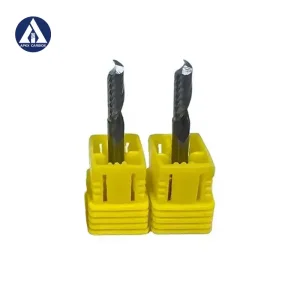
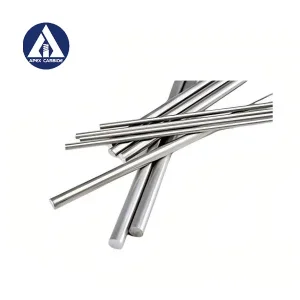
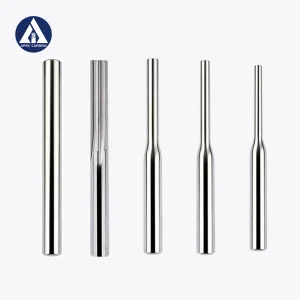
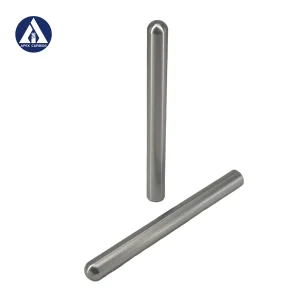
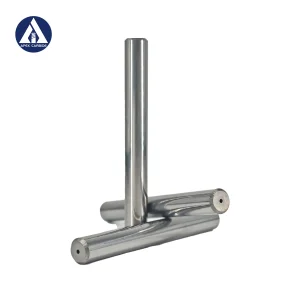
Complete your supply setup with pre-cut carbide bars, IC substrate rod blanks, single/double coolant channels, and customized milling geometries engineered for precision manufacturing.
Straightforward technical and commercial answers directly from our metallurgy engineering team to help you streamline factory audits, grade selection, and volume shipments.
Standard cutting tools (such as end mills for structural steel) typically employ carbide grain sizes between 0.6μm and 1.2μm with 10%–12% cobalt binders to balance shock resistance and edge toughness. In contrast, PCB drill rods require specialized sub-micron or ultra-fine grain structures (0.2μm to 0.5μm) and high hot hardness (above 93.0 HRA). This microstructure provides the exceptional stiffness and micro-edge integrity necessary to spin at speeds up to 300,000 RPM without catastrophic transverse bending or deflection under deep-stack multi-layer aspect ratios.
Our production facilities utilize modern high-precision CNC centerless pass-through grinding machines paired with laser gauging systems. We hold outside diameter (OD) cylindrical tolerances to ISO h5 (0 / -0.005mm) or tighter on request. Total Indicator Reading (TIR) runout is held within 0.002mm along the entire length, and automated optical comparators inspect every batch to ensure chamfers are free of chipping before packaging.
Yes. In addition to universal 330mm master bars, we supply pre-cut rod blanks in standard PCB drill dimensions—such as Ø3.175mm (1/8") x 38.1mm, 38.2mm, or 40mm—with standardized single or double end chamfers. We also produce stepped pre-forms, pre-ground Weldon flats, and custom blank profiles based on client CAD engineering drawings, reducing cycle time and diamond wheel wear on your grinding equipment.
For standard warehouse diameters (including Ø3.175mm micro-drill shanks in ultra-fine and sub-micron grades), samples are available with a low minimum order threshold of 1 piece for pilot validation. Standard custom batch orders typically range from 500 to 10,000 pieces with lead times between 7 and 25 calendar days, supported by direct air or sea freight shipping from our Jiangxi factory.
Traditional vacuum sintering can leave microporosities inside the tungsten-cobalt matrix. Under high rotational speeds and multi-layer entry forces, these voids serve as crack initiation sites that cause sudden tool failure. By subjecting the material to 60-bar inert gas pressure at sintering temperatures during our Sinter-HIP cycle, residual micro-cavities collapse completely. This yields a dense, uniform metallurgical structure certified to A00, B00, C00 porosity standards.