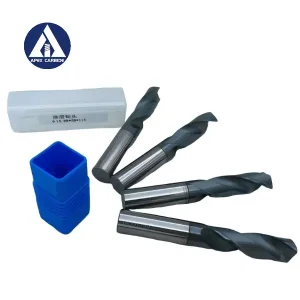
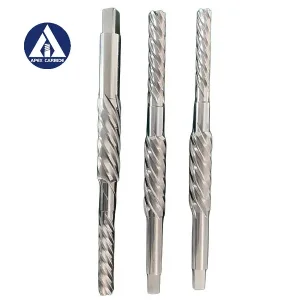
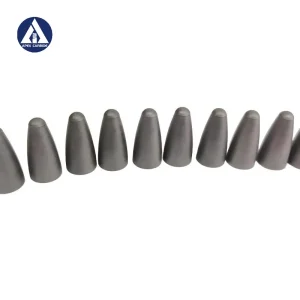
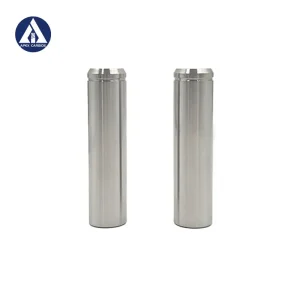
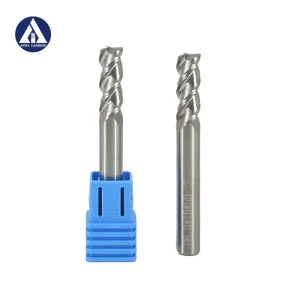
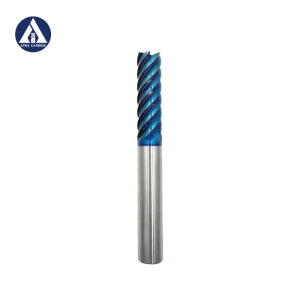
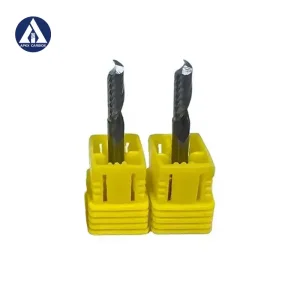
Sri Lanka Precision Solid Carbide Drills with PVD Micro-Coating
- Grain Size: 0.4–0.6 µm Submicron
- Hardness: 92.5–93.2 HRA
Engineered with extreme resistance to abrasive degradation, optimized thermal conductance, and sub-micron grain sizing for rigorous die, mold, and component manufacturing.
A rigorous metallurgical overview of tooling demands across Western Province industrial estates, regional agricultural machinery hubs, and maritime maintenance corridors.
Sri Lanka's manufacturing landscape is witnessing a structural shift from conventional labor-intensive operations to high-precision engineering. Centralized around economic strongholds like the Katunayake and Biyagama Export Processing Zones (EPZs), as well as light-engineering corridors in Ekala and Horana, Sri Lankan industrial facilities increasingly rely on multi-axis CNC machine centers. The domestic industrial transition encompasses specialized rubber mold manufacturing—driven by Sri Lanka's global position in solid industrial tires and pneumatic retreading—along with precision components for apparel automation, tea and spice processing machinery, and gemological lapidary tools.
Historically, Sri Lankan machine shops have been dependent on high-speed steel (HSS) and low-grade tungsten imports that fail prematurely under the elevated thermal cycles caused by high-silicon aluminum casting machining, vulcanized mold die steels (such as P20 and 1.2344 / H13), and abrasive composite materials. Jiangxi Apex Carbide bridges this gap by directly supplying industrial machine shops and Tier-1 suppliers across Colombo, Gampaha, and Kandy with metallurgical-grade solid tungsten carbide rods, blanks, and custom profiled cutters engineered precisely for harsh operational environments.
Furthermore, Colombo’s strategic maritime role—bolstered by the Colombo Dockyard PLC—generates heavy demands for corrosion-resistant wear parts, marine shaft sleeving, heavy-duty rotary burrs, and marine engine valve seating cutters. Our tailored supply model solves localized inventory bottlenecks, lowering the overall Cost Per Cutting Edge (CPCE) for Sri Lankan operations facing currency volatility and competitive delivery timelines.
Sri Lanka produces an estimated 20% of the world's solid industrial tires. Machining pre-hardened die steels requires high transverse rupture strength (TRS > 3800 MPa) to resist chipping during interrupted cutting of deep tire tread siping patterns.
Colombo Port’s dry docks demand industrial tungsten carbide burrs, heavy-pitch slitting cutters, and custom cylindrical sleeves that withstand saltwater thermal corrosion and high mechanical stress during propulsion maintenance.
The processing of abrasive black tea leaves and hard fibrous coconut husks quickly dulls soft steel blades. Apex Carbide custom-manufactures wear strips, granulator knives, and rotary pulverizers that yield up to 12x continuous service life.
How Jiangxi Apex Carbide synthesizes pure virgin tungsten carbide (WC) and cobalt (Co) matrixes to eliminate micro-voids and deliver absolute operational predictability.
Conventional vacuum sintering often leaves microporosities within the tungsten carbide lattice, leading to micro-chipping when an end mill encounters hard inclusions or intermittent cutting stresses. Apex Carbide executes 100% of its sintering cycles inside German-engineered low-pressure Sinter-HIP (Hot Isostatic Pressing) units at 1450°C and 100 bar argon gas pressure.
This intensive thermomechanical densification process closes internal pores to classification A00, B00, C00 (ISO 4505), directly increasing transverse rupture strength by 20% to 35% compared to ordinary sintered blanks. For Sri Lankan manufacturing engineers cutting tough nickel-alloys, titanium grade 5, or hardened mold dies, this eliminates sudden catastrophic shank failure.
Our in-house powder metallurgy laboratory accurately controls sub-micron (0.4–0.8 µm) and ultra-fine (< 0.4 µm) grain boundaries, producing consistent hardness values exceeding 92.5 HRA without compromising edge elasticity.
| APEX Grade | Co Content (%) | WC Grain Size | Hardness (HRA) | TRS (MPa) | Optimal Sri Lankan Industrial Application |
|---|---|---|---|---|---|
| APX-UF06 | 6.0% | 0.5 µm (Submicron) | 93.2 | 3900 | High-speed graphite electrode routing, optical glass/gem lapidary tools, brass milling. |
| APX-MG10 | 10.0% | 0.6–0.8 µm (Micrograin) | 92.0 | 4200 | General steel & cast iron milling, textile machinery stitch needles, standard end mill blanks. |
| APX-EF12 | 12.0% | 0.4 µm (Ultrafine) | 92.4 | 4400 | Deep-cavity rubber tire molds (P20/H13), marine propeller shaft milling, titanium aerospace tier-3. |
| APX-HD15 | 15.0% | 1.0–1.4 µm (Medium) | 89.0 | 4600 | Heavy punching dies, tea packaging stamping dies, high-impact cold heading wear components. |
Direct supply advantages from China’s primary tungsten corridor in Jiangxi directly insulated against global spot-market price spikes.
The global supply of Ammonium Paratungstate (APT) and tungsten concentrate remains concentrated in Jiangxi Province, China. Sri Lankan importers who procure through regional third-party trading hubs frequently absorb up to 40% in compound markups and prolonged shipping delays. Sourcing directly from Jiangxi Apex Carbide Co., Ltd. gives Sri Lankan procurement officers an unmediated factory gateway.
In high-precision manufacturing, the tool purchase price represents less than 4% to 7% of total CNC production expenses; machine cycle time, downtime for insert/end mill swap, and scrap rates constitute the overwhelming majority. By supplying precision preformed rods with near-net-shape geometries—such as pre-formed ball-nose blanks, ground chamfers, and precise coolant channels—we remove hours of heavy rough-grinding from toolroom CNC grinders in Sri Lanka. This directly extends expensive diamond wheel life and reduces cycle time per tool by up to 45%.
With guaranteed stable contracts, buffer inventory allocations, and batch-level material certifications, Sri Lankan manufacturers are shielded from international raw material spikes, ensuring project delivery consistency.
Pre-molded blanks matching the workpiece envelope slash grinding cycles, diamond wheel consumption, and localized scrap rates by up to 60% in local grinding facilities.
Seamless logistics corridors via Colombo Bandaranaike International Airport (CMB) air cargo or maritime containers via Colombo Port with full documentation.
Every shipment is backed by spectroscopic powder assays, hardness test logs, and ultrasonic flaw-detection reports matching specific sintering batch numbers.
Facilitating seamless customs clearance through the Board of Investment of Sri Lanka (BOI) protocols with full metallurgical certifications.
Operating under BOI Sri Lanka agreements grants enterprises within the Katunayake, Biyagama, Mirigama, and Seethawaka export free trade zones preferential tariff structures, duty exemptions, and streamlined port clearance on production inputs. Apex Carbide provides complete, error-free documentation under Harmonized System (HS) Codes:
Our export compliance desk coordinates directly with your designated clearing and forwarding agents at Colombo port or air terminal, supplying Certificates of Origin (COO), Form-E/Chamber certifications, RoHS/REACH compliance records, and material data sheets (MSDS) for expedited release.
We maintain an English-fluent technical application engineering desk dedicated to international clients. Sri Lankan toolmakers, tool rebuilders, and manufacturing plants can transmit 2D CAD drawings (DXF, DWG, PDF) or 3D STEP files directly for comprehensive DFM (Design for Manufacturability) assessment.
This direct engineering-to-engineering collaboration bridges geographic distance and guarantees that tooling geometries are optimized for your precise spindle torque, cooling pressure, and workpiece hardness.
Strategic advancements in physical vapor deposition (PVD), chemical vapor deposition (CVD), and ultra-fine binder systems engineered for high thermal loads.
By integrating silicon into an aluminum-titanium-nitride lattice, our PVD nano-composite coatings achieve oxidation thresholds up to 1100°C and a nano-hardness of 3600 HV, ideal for dry, high-speed machining where wet coolant is impractical.
For extreme abrasive resistance in non-ferrous and optical stone grinding, our R&D pipeline introduces ultra-dense binderless WC compositions that completely resist cobalt leaching caused by chemically active synthetic cooling fluids.
We are establishing a closed-loop collection protocol for worn carbide scrap in Sri Lanka, supplying credits toward virgin tooling orders and significantly cutting your carbon footprint and raw material procurement costs.
Essential guidance on tolerances, metallurgical composition, shipping transit times, and custom tool engineering.
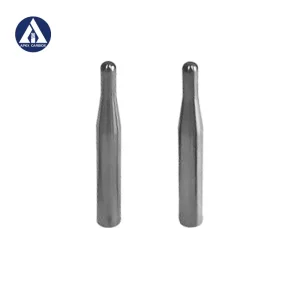
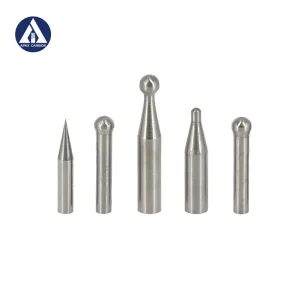
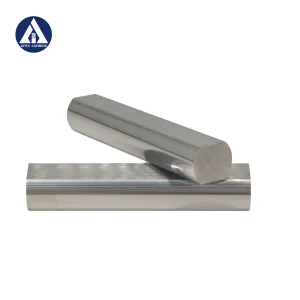
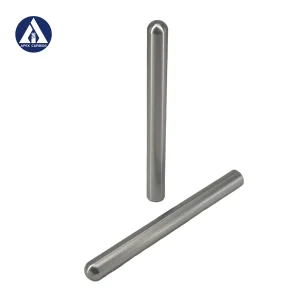
Explore our comprehensive product lines: ground rod stock, preforms with Weldon flats, ball nose blanks, and high-performance aluminum cutters.