
China Solid Tungsten Carbide Slitting Saw Manufacturers & Factories
Direct-from-source precision micro-grain carbide rotary slitting cutters, narrow-slot circular saws, and integrated OEM slitting solutions engineered for aerospace, electronics, and precision metal slitting operations.
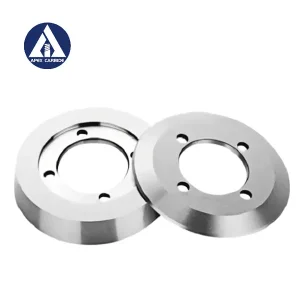
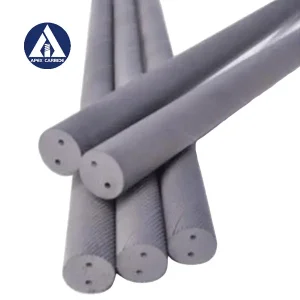
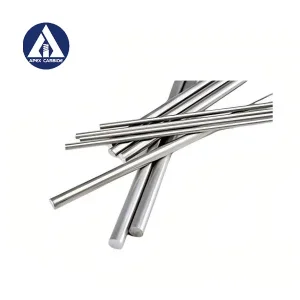
Precision Carbide Tooling & Saw Blanks
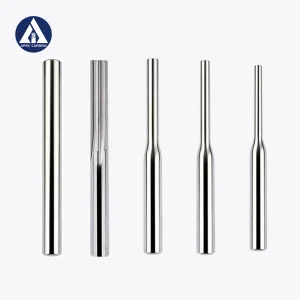
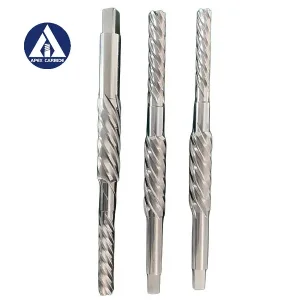
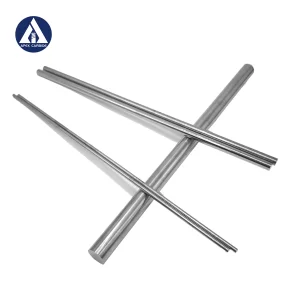
Explore standard, customized, and high-precision ground solid carbide blanks and circular rotary cutting solutions manufactured with zero-porosity sinter-HIP technology.
Engineering Fundamentals of Solid Tungsten Carbide Slitting Saws
In ultra-narrow slotting, parting, cut-off, and cutoff-milling operations, tool rigidity and micro-structural consistency dictate production yields and dimensional stability across millions of cycles.
Micro-Grain WC-Co Metallurgy
Solid tungsten carbide slitting saws rely on ultrafine and submicron tungsten carbide grain matrices (typically 0.4 µm to 0.8 µm) bonded by balanced cobalt contents (6% to 12%). This structure ensures an optimum compromise between ultra-high Vickers hardness (HV 1500–1850 / HRA 91.5–93.5) and superior transverse rupture strength (TRS ≥ 3800 MPa).
Unlike conventional High-Speed Steel (HSS) or bimetal saws that soften at elevated cutting temperatures, cemented carbide sustains continuous high-speed dry and MQL slitting up to 900°C without plastic deformation or rapid flank abrasion.
Sinter-HIP Densification Tech
Internal porosity is the root cause of catastrophic micro-chipping and catastrophic failure in circular slitting blades during thin-kerf cutting. Chinese state-of-the-art facilities leverage 10 MPa overpressure Low-Pressure Sinter-HIP integrated vacuum furnaces.
By applying controlled hydrostatic argon gas pressure at the liquid phase sintering stage, micro-voids are eliminated, delivering near-theoretical density (14.2–14.95 g/cm³), uncompromised isotropic fracture toughness, and mirror-finished cutting edges via multi-axis CNC peripheral grinding.
Axial Run-Out & Side Clearance
Kerf precision requires sub-micron manufacturing tolerances. Top-tier Chinese manufacturers utilize automated precision double-disc surface grinding and Walter/Anca CNC grinding centers to maintain blade thickness tolerances within ±0.002 mm, axial run-out (wobble) below 0.005 mm, and radial run-out below 0.008 mm.
Engineered concave side clearance grinding (side taper) prevents sidewall galling, diminishes frictional heat buildup, and eliminates work hardening on critical surfaces such as austenitic stainless steels, nickel alloys, and copper commutators.
China's Integrated Carbide Supply Chain Ecosystem
China supplies over 80% of the world's upstream tungsten ore and downstream refined tungsten compounds. Partnering with a domestic Chinese manufacturer yields structural cost resilience, quality predictability, and streamlined logistics.
Upstream Dominance
Direct proximity to Jiangxi and Hunan tungsten hubs guarantees uninhibited access to Ammonium Paratungstate (APT), ultra-pure Tungsten Powder, and Tungsten Carbide powders, isolating production from global commodity market shocks.
Vertical Integration
From proprietary WC powder formulation, spray drying, and dry pressing to precision Sinter-HIP sintering, centerless OD grinding, and PVD coating, full traceability ensures zero cross-contamination and uniform batch hardness.
Rapid Prototyping
Tooling and machine engineering teams process non-standard slitting saw inquiries with rapid turnaround, delivering customized prototypes, thin-wall blanks, and micro-grooving cutters in 7 to 15 business days.
Global OEM Scale
Trusted by multinational tooling brands, precision spindle makers, and consumer electronics contract manufacturers spanning North America, the European Union, Japan, and Southeast Asia.
Carbide Grade Matrix for Slitting & Grooving
Selecting the optimal cobalt binder ratio and grain topology is essential to prevent edge chipping while maximizing wear resistance during continuous cut-off operations.
| Carbide Grade | Cobalt Content (wt%) | WC Grain Size (µm) | Density (g/cm³) | Hardness (HRA / HV) | TRS (MPa) | Recommended Applications |
|---|---|---|---|---|---|---|
| APX-S06 (Micro-Fine) | 6.0% | 0.5 – 0.7 | 14.90 | 93.0 HRA / 1850 HV | 3200 | Semiconductor wafer dicing, carbon fiber (CFRP), non-ferrous electronics, commutator slotting. |
| APX-S08 (Submicron) | 8.0% | 0.6 – 0.8 | 14.75 | 92.4 HRA / 1720 HV | 3500 | High-speed parting and cut-off of stainless steels (304/316), structural steels, and brass tubing. |
| APX-S10 (Universal) | 10.0% | 0.7 – 0.9 | 14.50 | 91.8 HRA / 1640 HV | 3800 | General machinery grooving, titanium aerospace alloys, interrupted cut-off milling, thin-gauge tubing. |
| APX-S12 (High Shock) | 12.0% | 0.8 – 1.2 | 14.30 | 90.5 HRA / 1520 HV | 4200 | Heavy-feed slitting, deep-grooving steel castings, high-impact interrupted parting, low-rigidity setups. |
Precision Slitting Application Scenarios
Engineered to deliver clean edges, zero burr formation, and tight kerf tolerances across rigorous production lines.
Automotive & EV Commutator Slotting
Micro-slitting copper and mica segments in electric vehicle traction motors, starters, and alternator armatures requires razor-sharp cutting edges without copper smearing or mica flaking. Submicron carbide saws with mirror face-polishing provide repeatable cuts exceeding 50,000 passes per sharpening.
Semiconductor & PCB Leadframe Trimming
High-density interconnect (HDI) printed circuit boards and semiconductor lead frames use solid carbide slitting blades to trim gold-plated copper leads, composite substrates, and ceramic hybrids without edge delamination, burring, or electrostatic tool degradation.
Medical Device Hypodermic Tubing Cut-Off
Precision cut-off of stainless steel 304/316L, nitinol, and titanium hypodermic capillary tubing demands burr-free inner and outer diameters. Carbide slitting saws down to 0.10 mm kerf thickness ensure precision ends, eliminating secondary deburring and reaming cycles.
Localized Support & International Compliance Assurance
Global procurement teams demand absolute regulatory peace of mind alongside factory-direct pricing. We deliver full transparency from chemical documentation to local logistics integration.
Conflict-Free & ESG Traceability
Our raw materials comply fully with the Dodd-Frank Act Section 1502 and the EU Conflict Minerals Regulation (2017/821). Every batch of tungsten carbide is certified responsibly sourced via RMAP-conformant smelters with ISO 14001 environmental management certification and zero child labor guarantees.
RoHS, REACH & Material Certification
All delivered solid carbide tools, discs, and preforms undergo rigorous glow discharge optical emission spectroscopy (GD-OES) testing. We supply batch-specific 3.1 Material Test Certificates (EN 10204) verifying exact cobalt ratios, density, hardness, magnetic saturation, and compliance with EU REACH and RoHS restrictions.
DDP Global Shipping & Consignment
To reduce import friction for international toolmakers and OEMs, we offer flexible commercial frameworks including DDP (Delivered Duty Paid), DAP, and regional consignment stock options. Dedicated English and German speaking application engineers handle technical reviews and supply chain integration.
Next-Generation Advancements in Carbide Slitting Technology
As component miniaturization and tough superalloys become standard in high-tech manufacturing, circular slitting saws are evolving through chemical, geometric, and surface engineering.
HiPIMS & Multi-Layer AlTiSiN Coatings
High-Power Impulse Magnetron Sputtering (HiPIMS) is replacing conventional thermal PVD. It applies ultra-dense, droplet-free nanolaminate coatings (such as AlTiSiN and Diamond-Like Carbon) down to 1.5 µm thickness, enhancing surface lubricity, cutting friction coefficients by 40%, and withstanding oxidation beyond 1100°C.
Ultra-Thin Kerf Miniaturization
In response to precious metal cutting and micro-channel heat exchanger manufacturing, China's precision grinders achieve razor blade thicknesses down to 0.05 mm (50 µm) with strict flatness tolerances, drastically minimizing kerf scrap loss in gold, platinum, and cobalt-chrome machining.
Circular Economy & Scrap Buy-Back
Modern Chinese carbide manufacturers provide integrated closed-loop tungsten recycling ecosystems. End-of-life carbide saws and grinding sludges are reclaimed via zinc recycling or hydrometallurgical processing, reducing the carbon footprint by 65% and stabilizing raw material costs.
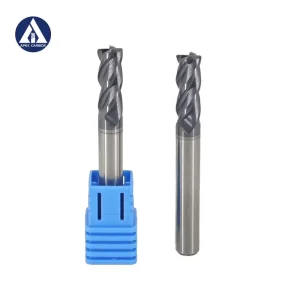
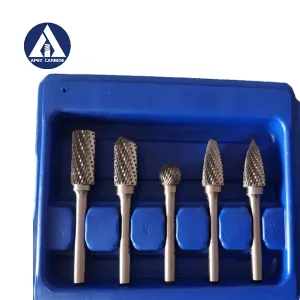
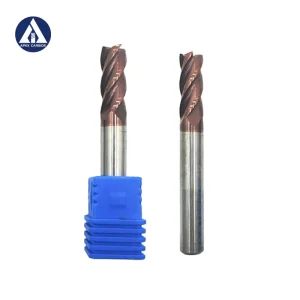
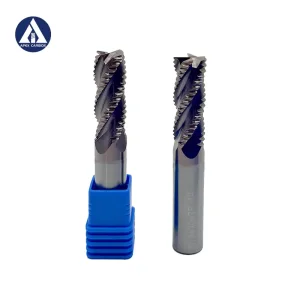
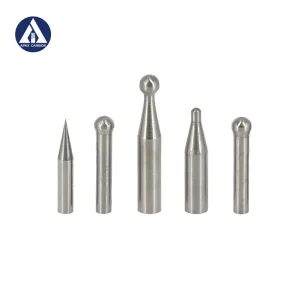
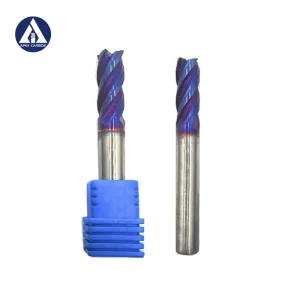
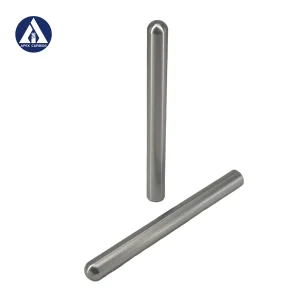
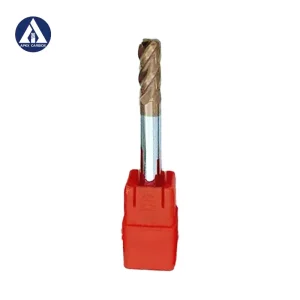
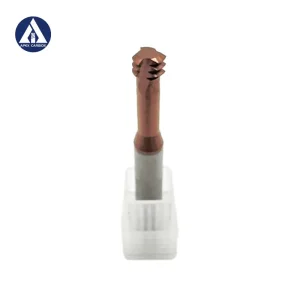
Precision Solid Carbide Rotary End Mills & Blank Form Solutions
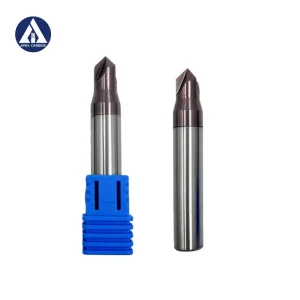
Explore high-hardness coated end mills, preformed ball-nose blanks, and high-performance threading solutions built for demanding CNC industrial applications.
Frequently Asked Questions for Sourcing Managers
Key technical and commercial answers regarding factory audits, custom drawing tolerances, and lead times.