Featured Precision Tool Blanks & Milling Cutters
Engineered from premium submicron tungsten carbide powders with integrated Sinter-HIP processing. Explore our core standard stock and custom configured cutting substrates.
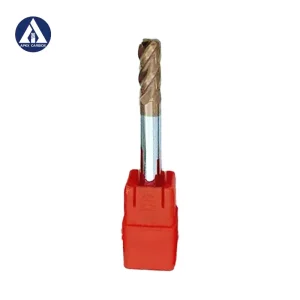
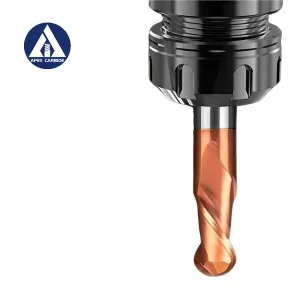
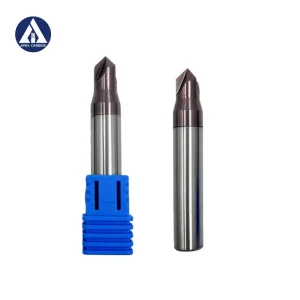
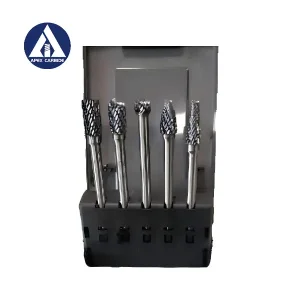
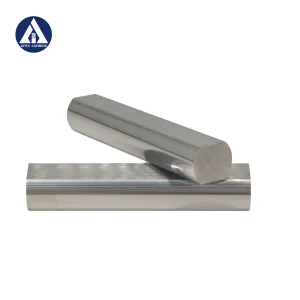
Engineering Architecture: Tungsten Carbide Sheets for Tools
Tungsten carbide sheets and wear plates represent the foundational substrate for modern high-precision cutting tools, stamping dies, progressive punches, woodworking cutters, and severe-wear industrial components.
Metallurgical Synthesis & The WC-Co Phase Equilibrium
In high-performance industrial cutting tools, mechanical integrity relies on the microstructural equilibrium between primary refractory tungsten carbide (WC) crystals and the ductile metallic cobalt (Co) or nickel (Ni) binder phase. The hardness, compressive strength, transverse rupture strength (TRS), and fracture toughness (K1C) of tungsten carbide sheets are governed by strict stoichiometric control of carbon saturation and grain diameter distributions.
Under-carburization promotes brittle eta-phase (W3Co3C or W6Co6C) intermetallics, triggering premature catastrophic fracture during high-shock milling or deep stamping. Over-carburization precipitates free graphite rosettes, degrading wear resistance, surface Ra finish, and edge retention. At APEX Carbide, our three manufacturing hubs in Jiangxi synthesize high-purity Ammonium Paratungstate (APT) via hydrogen reduction into controlled WC grain classifications—spanning ultrafine (0.4–0.6 µm), submicron (0.6–0.8 µm), fine (0.8–1.2 µm), to coarse (1.5–3.0 µm) matrices.
| Carbide Grade | Cobalt Content (wt%) | WC Grain Size (µm) | Hardness (HRA) | TRS (MPa / N/mm²) | Primary Industrial Application |
|---|---|---|---|---|---|
| APX-G06F | 6.0% Co | 0.4 – 0.6 (Ultrafine) | 92.8 – 93.5 | 3,800 – 4,100 | Aerospace & PCB Routing Hardened steels >55 HRC, graphite, abrasive composites |
| APX-G10M | 10.0% Co | 0.6 – 0.8 (Submicron) | 91.8 – 92.4 | 4,000 – 4,350 | Universal CNC Tooling End mills, high-performance reamers, precision slitting knives |
| APX-G12U | 12.0% Co | 0.5 – 0.7 (Submicron) | 91.2 – 91.8 | 4,200 – 4,500 | Severe Interrupted Cutting Titanium alloys, nickel-base superalloys (Inconel), mold dies |
| APX-G15C | 15.0% Co | 1.2 – 2.0 (Medium-Coarse) | 88.5 – 89.8 | 3,400 – 3,700 | Metal Stamping Dies High-impact blanking punches, cold heading dies, wear liners |
| APX-G08Ni | 8.0% Ni/Cr | 0.8 – 1.0 (Corrosion-Resistant) | 90.5 – 91.5 | 3,200 – 3,500 | Chemical & Slurry Valve trim plates, wire EDM blocks, petrochemical cutting knives |
China Factory Supply Chain Advantages for Global Tool OEM
Direct upstream integration from the world's most concentrated tungsten deposit reserves in Jiangxi Province delivers uncompromised pricing stability and agile scalability.
Mine-to-Matrix Upstream Control
Over 60% of the world's commercial tungsten reserves reside within South China. By having our production bases stationed in Nanchang, APEX secures virgin Ammonium Paratungstate (APT) without international speculative hedging markups, giving global tool manufacturers consistent bulk pricing insulation.
- 100% virgin powder sourcing (zero uncontrolled scrap contamination)
- In-house ball milling, spray drying, and automated granulating
- Direct batch chemical verification via ICP-OES spectrometers
Low-Pressure 60-Bar Sinter-HIP
Unlike conventional vacuum sintering, our furnaces execute combined vacuum dewaxing, liquid phase sintering, and 60-bar isostatic argon gas consolidation in a single thermal cycle. This eliminates microscopic pores, raising internal structural density to theoretical limits (A00, B00, C00 porosity ratings).
- Zero micro-voids for edge chipping resistance
- Transverse Rupture Strength boosted by >25%
- 100% ultrasonic C-scan testing for internal integrity
High-Agility Rapid Tooling
Our 3 integrated manufacturing centers operate over 50 automated hydraulic dry-presses, cold isostatic presses (CIP), and 5-axis Agathon, Rollomatic, and Walter tool grinders. Rapid prototyping for custom sheet profiles and pre-slotted forms is executed in 7–10 days with minimum order requirements as low as 1 piece.
- Standard stock plates dispatched within 48 hours
- In-house CNC graphite EDM electrode fabrication
- Over 1,000,000 finished blanks and tool units monthly
Global Enterprise Procurement & Compliance Assurance
International tool manufacturers require more than hard metal—they demand metallurgical reproducibility, zero supply-chain risk, clear HS tariff classification, and ethical origin compliance.
Regulatory Compliance & Traceability
All APEX carbide sheets and precision blanks are fully compliant with RoHS 3 (EU 2015/863) and REACH (EC 1907/2006) regulations. We strictly adhere to the Dodd-Frank Act Section 1502 Conflict Minerals trade protocols, sourcing tungsten exclusively from certified conflict-free smelters.
- EN 10204 3.1 Certified Material Test Reports with every batch
- Heat-treatment and sinter cycle digital batch logs archived for 10 years
- Harmonized System (HS) Code 8209.0090 export clearance optimization
Localized Technical Support Desks
To bridge global time zones, our technical sales and metallurgical consulting engineers operate extended support windows spanning European (CET), North American (EST/PST), and Asian (UTC+8) business hours. We review CAD drawings, offer grinding allowance guidance, and solve tool edge chipping issues directly.
- Bilingual metallurgical engineering team (English & Mandarin)
- Direct engineering-to-engineering DFM (Design for Manufacturability)
- Door-to-door DDP air/sea freight logistics networks across 50+ nations
Custom Tolerancing & Surface Finishes
Whether your machine shop requires as-sintered sheets for EDM wire cutting or pre-ground precision plates ready for braze assembly, our centerless, double-disc, and surface grinding lines hit sub-micron tolerances without internal tensile stress build-up.
- Thickness tolerance: ±0.005 mm (ground) / ±0.2 mm (as-sintered)
- Parallelism & Flatness: Within 0.003 mm across 300 mm lengths
- Surface roughness down to mirror finish Ra ≤ 0.05 µm
Mission-Critical Application Scenarios
Optimized carbide sheet microstructures engineered specifically for extreme wear, impact resistance, and high-precision cutting tool geometries.
Progressive Stamping & Lamination Dies
Used by precision punch makers for stamping silicon steel sheets, motor rotor/stator laminations, and lead frames. Medium-grain WC grades with 12% to 15% Co prevent micro-spalling under cyclic dynamic punching forces at speeds over 800 strokes per minute.
Woodworking & Planer Knife Inserts
Reversible carbide strips and brazed sheets for high-speed planing of MDF, HDF, solid hardwood, and glued plywood. Ultrafine WC grades (0.5–0.7 µm) maintain razor-sharp cutting edges without chipout, extending regrind intervals by 800% over high-speed steel (HSS).
Lithium Battery Electrode Slitting Knives
Submicron carbide disc cutters and shear sheets specifically formulated for slitting cathode (aluminum foil with lithium iron phosphate) and anode (copper foil with graphite). Ultra-dense Sinter-HIP structure prevents burr formation >1.5 µm, eliminating battery separator puncture hazards.
Metal Shearing & Heavy Slitting Cutters
Heavy carbide plates braze-bonded or mechanically clamped into continuous rotary shear assemblies for cold-rolled steel coil, stainless strip, and non-ferrous foil. Engineered with balanced Co-Ni binders to withstand severe thermal expansion and shear fatigue.
PCB V-Scoring & Micro-Drill Preforms
Precision circular sheets and micro-slitting knives designed for printed circuit board separation and fiber-reinforced FR-4 substrates. Highly uniform cobalt distribution suppresses resin smearing and burring across multi-layer high-density PCB panels.
Oil & Gas Choke Valves and Wear Tiles
Corrosion-resistant nickel-binder carbide sheets installed inside severe-service slurry pumps, mud motor bearings, and high-pressure drilling nozzles. Exceptional resistance against hydro-abrasive cavitation and aggressive H2S / CO2 sour well environments.
Technological Frontiers in Cemented Carbide Sheets
Key metallurgical evolutions shaping tool manufacturing competitiveness through 2026 and beyond.
Gradient Functional Sintering
Modern progressive dies demand surfaces that resist extreme abrasive friction, backed by a ductile core capable of surviving massive bending moments. APEX engineers employ vacuum nitrogen-controlled gradient sintering to create a cobalt-enriched, defect-tolerant core combined with a cobalt-depleted, ultra-hard (94 HRA) surface zone.
Nanostructured Grain Growth Inhibitors
To stop Ostwald ripening during high-temperature liquid-phase sintering, our powder metallurgy integrates dopants such as Vanadium Carbide (VC), Chromium Carbide (Cr3C2), and Tantalum-Niobium Carbide (TaNbC). This maintains submicron crystal uniformity, dramatically reducing thermal micro-cracking during dry high-feed milling.
Circular Carbide Recycling Ecology
With geopolitical supply restrictions on critical raw materials, APEX has established a closed-loop zinc recycling and chemical digest program. We reprocess tungsten scrap into pristine pure tungsten oxide without crystal degradation, helping international partners hit corporate ESG carbon-reduction mandates.
Technical & Procurement FAQ (Frequently Asked Questions)
Direct answers to the most rigorous metallurgical and commercial questions asked by toolmakers and sourcing directors.
What are the key metallurgical distinctions between Sinter-HIP and traditional vacuum sintering for carbide sheets?
How do I determine the right cobalt percentage (6%, 10%, 12%, or 15%) for my tooling application?
What standard dimensional tolerances and grinding finishes can APEX Carbide deliver on wholesale sheets?
Can APEX manufacture custom carbide preforms with wire EDM starter holes or step slots?
What quality documentation and metallurgical verification reports accompany wholesale shipments?
What are the typical lead times and minimum order quantities (MOQ) for international orders?
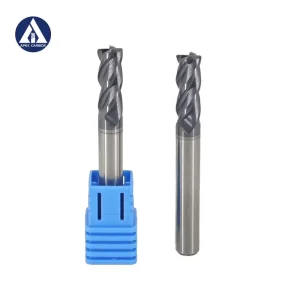
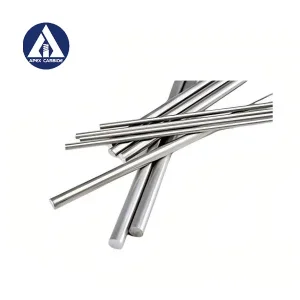
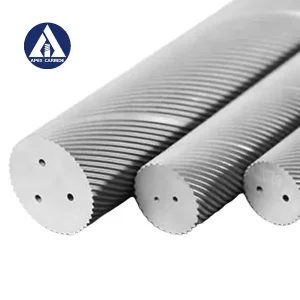
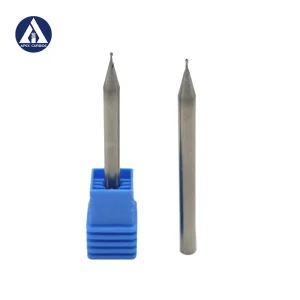
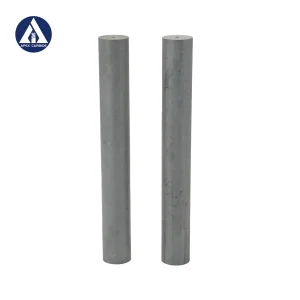
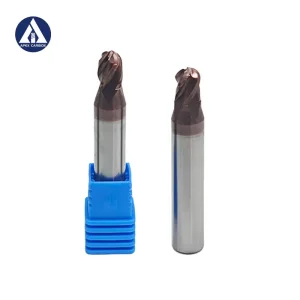
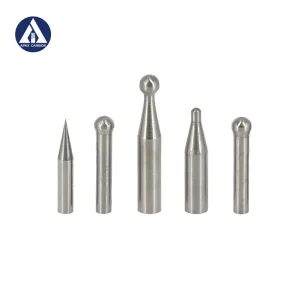
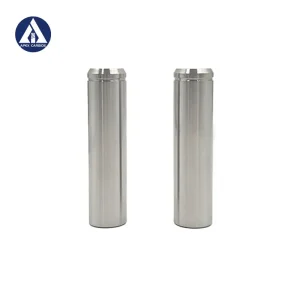
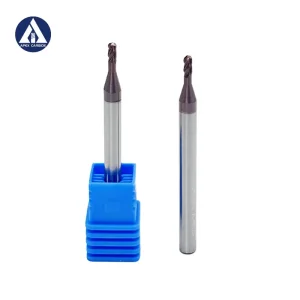
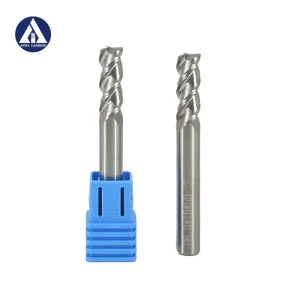
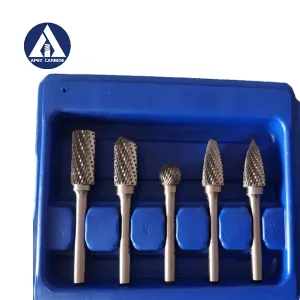
High-Performance End Mills, Rod Blanks & Rotary Burrs
Explore our complementary precision-ground blanks, micro-grain rotary burrs, and high-performance CNC milling tools engineered for extreme industrial longevity.
Collaborate Directly with APEX Sintering Engineers
Send us your sheet dimensions, target workpiece alloy, and mechanical wear conditions. Receive customized grade recommendations, sintered blank shrink-rate calculations, and factory quotation within 24 hours.