Precision Engineering Catalog
Featured Sintered Carbide Solutions (Batch 01)
Explore prime CNC tooling, precision rotary burs, coolant rods, and custom flat blanks ready for automated production lines.
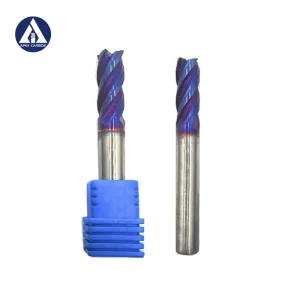
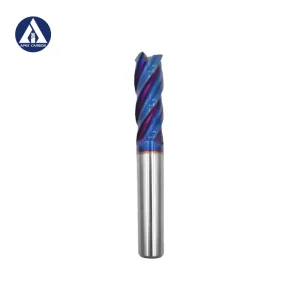
China 68 HRC Flat Carbide End Mills with NACO Blue Coating
Explore Specifications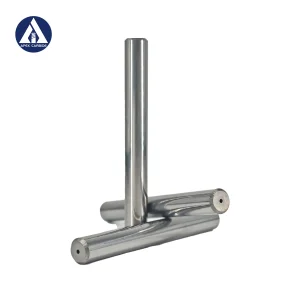
Chamfered Carbide Blank with Single Coolant Hole
Explore Specifications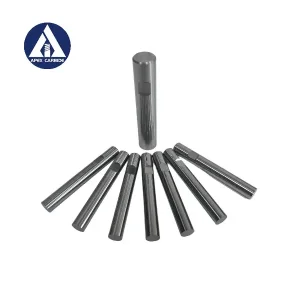
Cemented Carbide Round Bars with Weldon Flat
Explore Specifications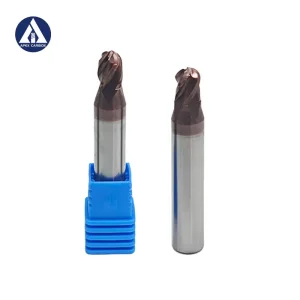
4 Flutes Ball Nose Carbide End Mills with TiALN Coating
Explore Specifications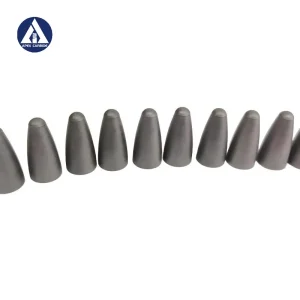
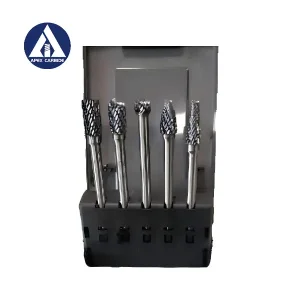
China Tungsten Solid Carbide Rotary Burr Blank
Explore Specifications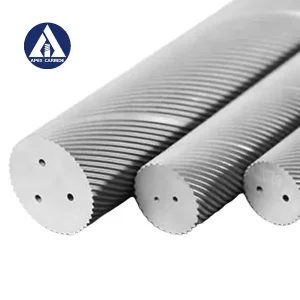
Carbide Rods with Two Helix Spiral Coolant Holes
Explore Specifications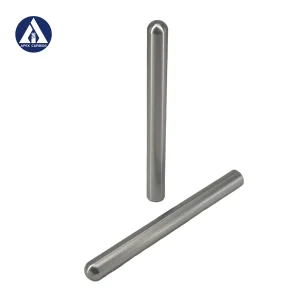
Preformed Ball Nose Blank Rods Pre-Machined Sphere Tip
Explore Specifications
Procurement Intelligence & Market Dynamics
Strategic Sourcing of Tungsten Solid Carbide Strips
A metallurgical analysis on addressing high-wear manufacturing friction, cycle times, and operational risks across global industrial ecosystems.
Enterprise Procurement Drivers
Global original equipment manufacturers (OEMs) and tooling workshops encounter severe supply bottlenecks when sourcing solid carbide strips. Industrial procurement is dictated by batch consistency, micro-grain homogeneity, and near-zero transverse rupture variance. Substandard strips cause uneven chipping in wood and metal machining knives, inducing catastrophic unplanned spindle downtimes.
Micro-Defect Elimination via Sinter-HIP
Standard vacuum sintering often allows micro-porosity (A02-B02 levels) to settle inside dense rectangular blocks. Through our 10 MPa Overpressure Sinter-HIP technology, APEX consolidates tungsten carbide (WC) grain structures up to 100 bar, virtually eliminating internal micropores and delivering extreme structural integrity against transverse rupture shocks.
Macro Industry Solutions
Our carbide wear plates and STB flat strips are optimized for: high-speed timber planing cutters, shear blades for non-ferrous foil slitting, progressive stamping die wear guides, and abrasive mining scraper linings. With engineered Cobalt binders from 4% to 15%, we tune wear-resistance versus impact-toughness precisely to each client's duty cycle.
Capacity Benchmarks
Precision Sintering Metrics & Factory Infrastructure
Full-chain manufacturing control spanning 3 integrated Jiangxi production facilities.
3
Integrated Production Plants
500+
Metallurgical Technicians
1M
Monthly Strip/Tool Units
99.8%
Density Consistency Grade
Material Science Whitepaper
Solid Carbide Strip Grade Specifications & Matrix Selection
Selecting the optimal balance between Rockwell hardness (HRA), grain size (µm), and transverse rupture strength (TRS).
| Carbide Grade Code | Cobalt Binder (% Co) | Grain Size (µm) | Density (g/cm³) | Hardness (HRA) | TRS (N/mm²) | Primary Industrial Application |
|---|---|---|---|---|---|---|
| APX-S06 (Ultra-Fine) | 6.0% | 0.4 – 0.6 | 14.95 | 93.2 | 3,600 | Refined woodworking strips, edge banders, synthetic board grooving |
| APX-S08 (Sub-Micron) | 8.0% | 0.6 – 0.8 | 14.80 | 92.4 | 3,850 | Cast iron shaping, electronic lead cut-off shears, paper slitters |
| APX-S10 (Universal) | 10.0% | 0.8 – 1.0 | 14.50 | 91.6 | 4,100 | Heavy timber cutters, wear plates, tool rest blanks, scraper inserts |
| APX-S12 (Impact Grade) | 12.0% | 1.2 – 1.6 | 14.30 | 89.8 | 4,300 | Progressive stamping punches, high shock extrusion dies, shredder teeth |
| APX-CR15 (Corrosion-Wear) | 15.0% (Ni/Cr/Co) | Sub-micron | 14.10 | 88.9 | 3,900 | Acidic/wet cutting conditions, chemical packaging foil slitting |
Future Engineering Trends
Technology Roadmap: 2026–2030 Carbide Evolution
Addressing structural trends across composite machining, additive pre-forms, and sustainable closed-loop tungsten refining.
Nano-Crystalline Binderless Formulations
As advanced carbon-fiber reinforced plastics (CFRP) and MMC alloys dominate aerospace and automotive lightweighting, traditional cobalt binders face catalytic wear. APEX is expanding binder-free and ultra-low binder nano-WC strip series with hardness surpassing 94 HRA, providing chemical resistance and zero adhesion pitting.
Global Localization & Regulatory Compliance
Navigating global supply chain regulations necessitates full metallurgical transparency. APEX enforces verified Responsible Minerals Sourcing (RMI conformant, conflict-free tungsten), full RoHS/REACH material declarations, and provides direct logistics corridors into Europe, North America, Southeast Asia, and Latin America.
Closed-Loop Circular Economy
Tungsten volatility highlights the value of secondary resource recovery. APEX incorporates refined scrap-carbide recycling loops via eco-friendly chemical extraction, producing high-purity ammonium paratungstate (APT) that matches virgin ore purity while lowering the carbon footprint of every sintered strip by 38%.
Engineering Clarifications
Frequently Asked Technical & Sourcing Questions
Direct answers for purchasing directors, tooling managers, and CNC design engineers.
What is the standard tolerance range for APEX solid carbide strips?
We supply unground/sintered blanks with standard tolerances of ±0.3 mm to ±0.8 mm depending on length, as well as precision diamond-ground strips with thickness and width ground to ±0.01 mm (±0.0004 in) and ground bevel angles held to ±30 minutes.
How do Sinter-HIP carbide strips compare to conventional vacuum sintered strips?
Conventional vacuum sintering leaves micro-voids under elevated stresses. Sinter-HIP applies 60 to 100 bar of inert Argon pressure during the liquid phase, increasing Transverse Rupture Strength (TRS) by 15–20% and reducing edge micro-chipping on cutting edges.
Can you manufacture customized strips according to our CAD drawings?
Yes. Our tooling facility produces custom profiles including bevel-edged strips, single/double taper blanks, multi-hole wear bars, and pre-formed radiused strips, minimizing downstream EDM and diamond grinding for our customers.
What minimum order quantities (MOQ) and production lead times apply?
Standard warehouse catalog strips have an MOQ of 1 piece for evaluation. Custom OEM/ODM sintered grades typically require small pilot quantities (10–50 pcs) with rapid prototype delivery in 7–10 days and mass production runs delivered in 15–25 days.
Finished Tooling & Blanks
Extended Tooling & Rod Line (Batch 02)
Complete your supply chain with our companion thread mills, raw sintered blanks, and coated milling cutters.
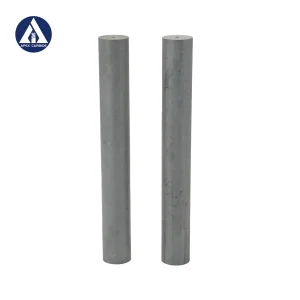
Unground Carbide Rod Blank with Axial Coolant Hole
Explore Specifications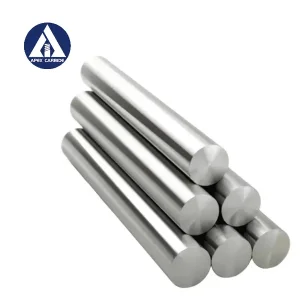
China Solid Carbide Rods for End Mills & Drills
Explore Specifications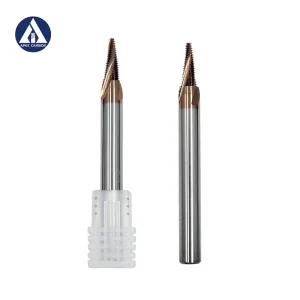
Tapered Thread Milling Cutter with TiALN Coating
Explore Specifications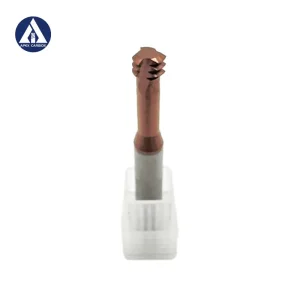
Three Tooth General Machining Thread End Mill
Explore Specifications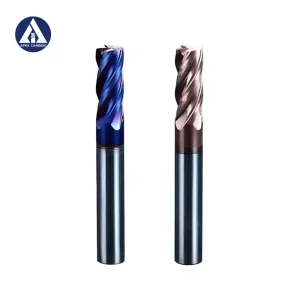
High-Precision Tungsten Solid Carbide End Mill
Explore Specifications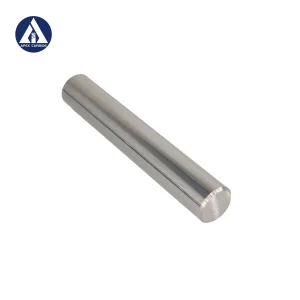
Unground Sintered Carbide Rod Blank 330mm Long
Explore Specifications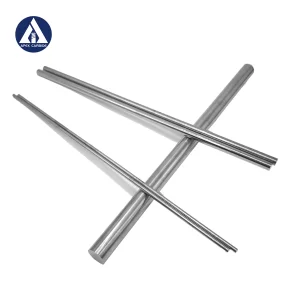
Solid Carbide Round Blank Rod Cut to Length
Explore Specifications