High-Performance Tooling Solutions (Featured Catalog)
Premium cemented carbide blanks and cutting solutions precision-ground to h5/h6 tolerances for high-speed machining.

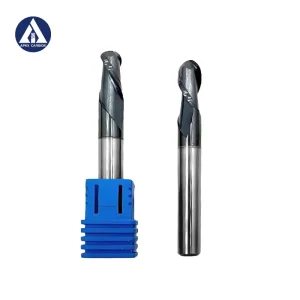
China 2 Cuts Ball Nose/Spherical Solid Carbide End Mills for Stainless Steel Manufacturer, Supplier
Inquire Spec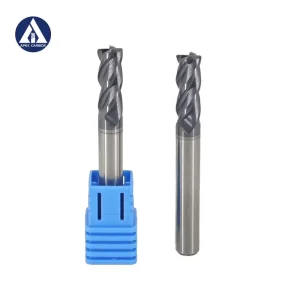
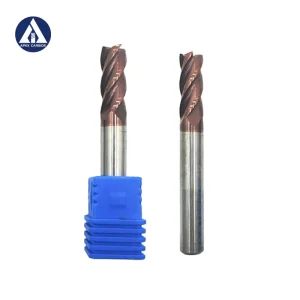
Wholesale Corner Radius Carbide Milling Cutters with Coated for Stainless Steel Manufacturer, Suppliers
Inquire Spec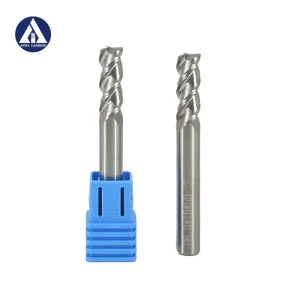
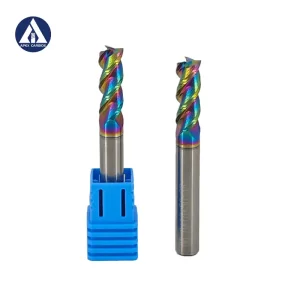
China Solid Carbide End Mills for Aluminium with Polished/High Gloss Manufacturers, Supplier
Inquire Spec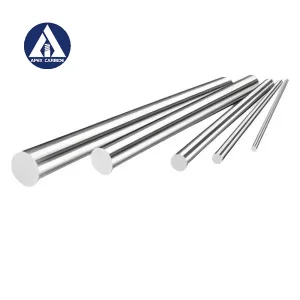
Wholesale High Quality Tungsten Solid Carbide Rod with Ground or Unground Manufacturer, Supplier
Inquire Spec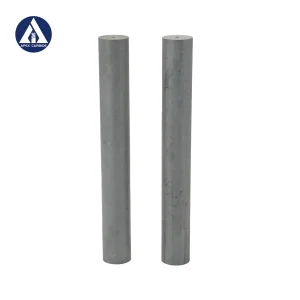
Wholesale Unground Cemented Carbide Round Rod Blank with Axial Coolant Hole for Solid Drill Production Manufacturer, Suppliers
Inquire Spec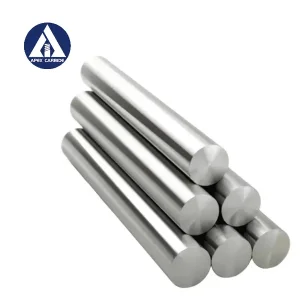
China Tungsten Solid Carbide Rods for End Mills and Drills with stable high quality from China Factory, Factories
Inquire SpecGlobal State of Cemented Tungsten Carbide Manufacturing
A comprehensive examination of raw material geopolitical supply chains, metallurgical integrity, and microstructure economics in contemporary manufacturing.
Supply Chain Concentration & Ore Refining
Tungsten (chemical symbol W, atomic number 74) boasts the highest melting point of all refractory metals at 3,422°C. With global ore concentration heavily located in Southern China (Jiangxi and Hunan provinces), direct vertical integration from ammonium paratungstate (APT) reduction into tungsten carbide (WC) grain powders provides unbeatable resilience against international price swings, reducing risk for high-volume consumers.
Sinter-HIP Metallurgical Compaction
Standard vacuum sintering frequently leaves microscopic voids that cause premature tool fracturing under heavy CNC load. Modern Sinter-HIP (Hot Isostatic Pressing) technology introduces up to 10 MPa of ultra-pure Argon pressure at 1,450°C during final phase densification. This obliterates microporosity (A00-B00 standard), elevating transverse rupture strength (TRS) past 4,000 MPa.
Grain Boundary & Binder Control
By precisely introducing grain growth inhibitors (such as Vanadium Carbide VC and Chromium Carbide Cr3C2), our fabrication processes restrict tungsten carbide crystal coarsening during liquid cobalt phase formation. This achieves uniform submicron (0.6–0.8 μm) and ultrafine (0.2–0.5 μm) grain distributions, delivering balanced abrasion resistance and fracture toughness.
Years of Powder Metallurgy Expertise
Integrated Manufacturing Plants
Monthly Finished Rod Production (pcs)
Centerless Precision OD Grinding Limits
Tungsten Carbide Rod Grade Selection Framework
Engineered chemistry matrix guiding tool fabricators toward optimal hardness-to-toughness ratios across varied cutting environments.
| Standard Grade | Cobalt Content (Co %) | Average WC Grain (μm) | Density (g/cm³) | Hardness (HRA / HV30) | TRS (N/mm²) | Primary Industrial Application |
|---|---|---|---|---|---|---|
| AX-06UF (Ultrafine) | 6.0% | 0.4 – 0.6 μm | 14.95 | 93.5 HRA / 1850 HV | 3,800 N/mm² | Abrasive non-ferrous, composite graphite, aluminum-silicon alloys, circuit boards (PCB micro-drills). |
| AX-10SM (Submicron) | 10.0% | 0.6 – 0.8 μm | 14.45 | 92.2 HRA / 1680 HV | 4,100 N/mm² | Universal high-performance end mills and drills for general carbon steel, pre-hardened steels <52 HRC. |
| AX-12UF (Micro-Grain) | 12.0% | 0.4 – 0.6 μm | 14.20 | 92.6 HRA / 1720 HV | 4,300 N/mm² | Titanium alloys, Inconel superalloys, 300/400-series stainless steel, heavy interrupted milling cuts. |
| AX-15M (Medium Grain) | 15.0% | 1.0 – 1.8 μm | 14.00 | 88.5 HRA / 1300 HV | 3,200 N/mm² | Cold heading punches, metal stamping dies, high-impact wear components, heavy mining core bits. |
Macro Industrial Solutions & Turnkey Implementations
Connecting carbide substrate morphology with real-world cutting efficiency to resolve deep-hole evacuation, heat deflection, and tool chatter.
Aerospace Superalloys
Machining Inconel 718 and Ti-6Al-4V titanium creates extreme thermal concentration at tool edges. Our submicron 12% Co helical coolant hole rods route pressurized cryogenic fluid directly to cutting faces, suppressing thermal softening and crater wear during structural fuselage milling.
Automotive Powertrain
High-volume machining of cast iron engine blocks, crankshafts, and lightweight EV aluminum battery trays demands zero chip re-cutting. We deliver cut-to-length preformed blanks with high Young’s modulus (up to 600 GPa), eliminating tool vibration and chatter marks.
Precision Die & Mold
Micro-ball nose cutters targeting quenched tool steels (H13, SKD11, D2 at 55–65 HRC) need maximum surface hardness. Our ultrafine grain carbide rods combined with nano TiSiN coatings resist severe adhesive abrasion during prolonged, unmanned finish milling operations.
Industrial Slitting & Converting
For processing lithium-ion battery separator films, copper foils, and corrugated packaging, our high-density solid carbide circular blades ensure pristine slitting edges devoid of burrs, tripling uninterrupted operating runtimes compared to conventional D2 tool steels.
Emerging Trends & Next-Gen Technology Roadmap
Tracking the shift toward nanostructured binder systems, closed-loop circular recycling, and 3D near-net-shape binder-jetting manufacturing.
Circular Economy & Scrap Reclamation
With tungsten designated as a critical strategic raw material worldwide, closed-loop zinc-recovery and chemical recycling have evolved beyond ecological PR. High-purity recycled tungsten carbide now demonstrates chemical equivalence to virgin APT, reducing global carbon footprints by up to 40% while sheltering contracts from raw material surges.
Cobalt-Free Alternative Binders
Global health regulations (REACH compliance) and cobalt price volatility have propelled intense R&D into alternative binders. Novel multi-component alloys incorporating Nickel-Iron (Ni-Fe) and High Entropy Alloys (HEA) exhibit equivalent fracture resistance alongside superior high-temperature corrosion and oxidation resistance in aggressive chemical milling.
Additive Manufacturing & Twisted Channels
Additive binder-jetting allows internal cooling architectures never achievable via traditional extrusion. Instead of standard straight or uniform helical holes, non-uniform variable-pitch inner coolant channels dynamicize hydraulic flow, maintaining maximum tool core stiffness while optimizing laminar fluid ejection at cutting lips.
Engineering Questions Answered by Sourcing Specialists
Critical procurement details regarding grinding tolerances, test batches, metallurgical traceability, and custom production.
What is the difference between Sinter-HIP and traditional vacuum sintering for carbide rods?
Which outer diameter (OD) grinding tolerances can you achieve on solid carbide rods?
What is the minimum order quantity (MOQ) and production turnaround for custom dimensions?
Can you manufacture helical coolant hole rods matching custom drill helix angles?
How do you verify metallurgical consistency and grade integrity across bulk orders?
Specialized Tool Blanks & Rotary Burrs (Full Production Lines)
Premium OEM/ODM blanks engineered to eliminate rough grinding passes, save spindle time, and accelerate tool delivery.
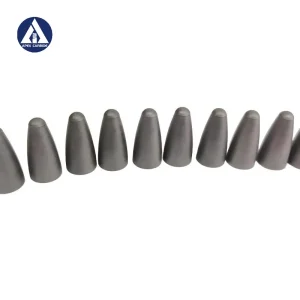
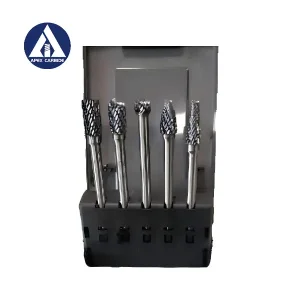
Wholesale Carbide Rotary Burrs with High Quality Short Delivery Time and Low MOQ Supplier, Factory
Inquire Spec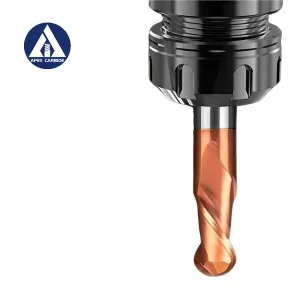
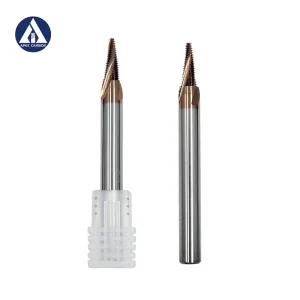
Wholesale 55 HRC TiSiN Nano coated ball nose end mill with 2 flutes Suppliers, Factories
Inquire Spec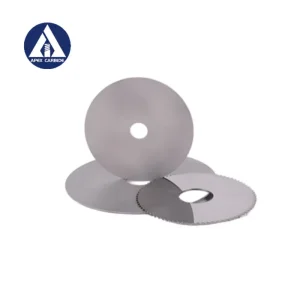
Wholesale Tungsten Carbide Disc Blade, Cemented Carbide Circular Custom Size Discs Precision Tungsten Carbide Disc Blade Manufacturers, Suppliers
Inquire Spec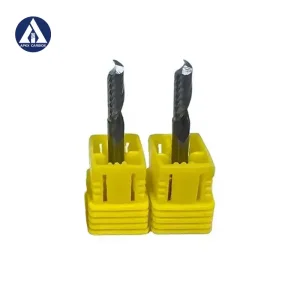
Wholesale Solid Carbide End Mills for Aluminium Drilling with Single Flute/One Cut. Factory, Factories
Inquire Spec