Featured Portfolio
High-Performance Cemented Carbide Rods & Milling Tools
Engineered to h5/h6 tolerances for high-feed roughing, precision finishing, and complex geometric profile cutting.
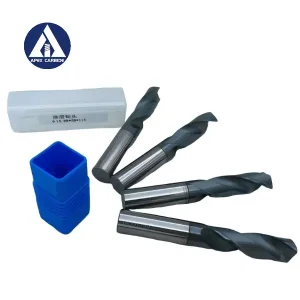
Wholesale Tungsten Solid Carbide Drills with Coated Customized Carbide Tools Manufacturers, Suppliers
View Specifications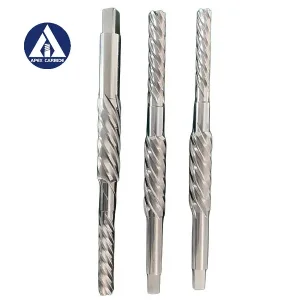
Wholesale Solid Cemented Carbide Reamers Tungsten Carbide Customized Tools Manufacturer, Manufacturers
View Specifications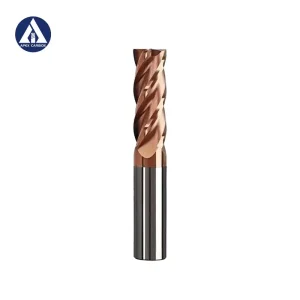
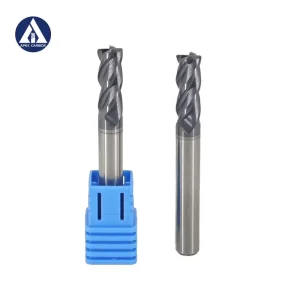
Wholesale China Bronze-colored Coating High Precision Carbide End Mills for HRC55 Solid Carbide Milling Cutter Manufacturers, Factories
View Specifications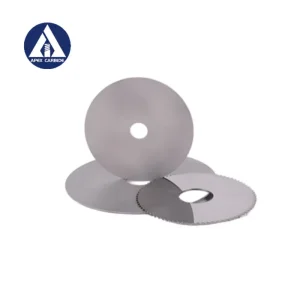
Wholesale Tungsten Carbide Disc Blade, Cemented Carbide Circular Custom Size Discs Precision Tungsten Carbide Disc Blade Manufacturers, Suppliers
View Specifications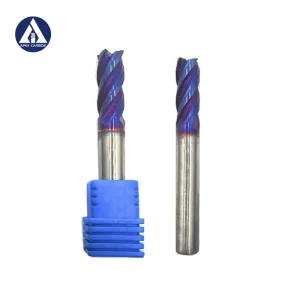
China 68 HRC Flat Carbide End Mills for High Hardness Metal with NACO Blue Coating Supplier, Factory
View Specifications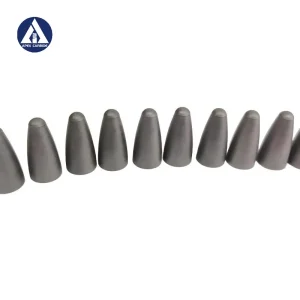
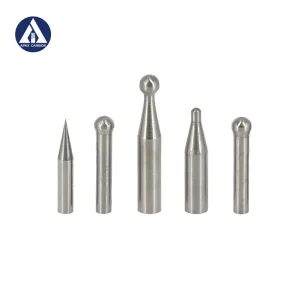
China Tungsten Solid Carbide Rotary Burr Blank Supplier, Factories
View Specifications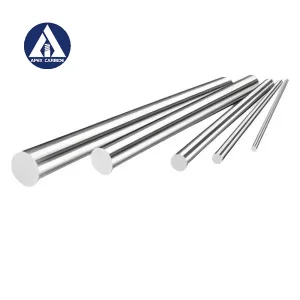
Wholesale High Quality Tungsten Solid Carbide Rod with Ground or Unground Manufacturer, Supplier
View SpecificationsMacro-Industrial Overview
Global Manufacturing Shifts & Advanced Material Demands
Analyzing supply chain resilience, upstream resource integration, and modern machining economics across high-demand manufacturing sectors.
Global Strategic Upstream Supply Chain
Over 80% of the world's raw tungsten reserve and ammonium paratungstate (APT) processing resides within China. As a premier manufacturing center, direct access to premium ore guarantees structural supply continuity, chemical purity, and resistance to market price fluctuations.
- Closed-loop supply chain security
- Stable pricing against volatile international APT swings
- Strict raw material purity monitoring
Modern Machining Thermodynamics
High-efficiency cutting in aerospace titanium alloys, heat-resistant superalloys (Inconel), and hardened die steels generates extreme localized thermal loads. Modern carbide rods incorporate submicron and ultrafine grain matrices that balance hot hardness with high fracture toughness.
- Elevated red hardness up to 900°C
- Optimized grain boundary cohesion
- Superior edge retention under cyclic thermal shock
Total Cost of Ownership Optimization
Purchasing tooling blanks directly from verified primary manufacturers reduces tooling cycle costs by up to 35%. Consistent material densities minimize tool grinder wheel wear, drastically lower grinding wheel dressing cycles, and reduce scrapped tool batches.
- Direct factory tier-1 OEM procurement
- Reduced wheel consumption on 5-axis CNC grinders
- Predictable flute grinding cycles & runout stability
20+
Years Powder Metallurgy Expertise
h5 / h6
Centerless Grinding Tolerances
10 MPa
Overpressure Sinter-HIP Densification
1,000,000+
Monthly Precision Tool Output
Application Engineering
High-Precision Industrial Application Scenarios
Specific metallurgical formulations tailored to mechanical load types, workpiece behavior, and environmental operating factors.
Aerospace & Superalloy Machining
Titanium (Ti-6Al-4V) and nickel-based superalloys require high chemical stability to prevent workpiece-tool diffusion. Rods formulated with 10–12% ultrafine cobalt binders provide superior transverse rupture strength (TRS > 4000 MPa) to resist chattering during interrupted deep pocketing.
- Turbine disk and blisk 5-axis machining
- Structural airframe wing-rib milling
- Helical coolant channels for thermal dissipation
Die & Mold Hard Machining (up to 68 HRC)
Machining hardened stamping tools, plastic injection molds, and hot work die steels (1.2379, SKD11) eliminates secondary electrical discharge machining (EDM) stages. Fine-grain Tungsten Carbide Rods with NACO and TiSiN coatings provide high mirror finishing reliability.
- High-speed finishing with ball nose cutters
- Elimination of micro-cracking and recast layers
- Long edge life in abrasive hardened states
3C Electronics & Micro-Drilling
From smartphone chassis to printed circuit board (PCB) micro-via routing, our solid carbide rods feature uniform cobalt dispersion that avoids drill deviation down to 0.1 mm diameters, ensuring high positional accuracy and wall finish.
- Burr-free edge routing for aluminum-magnesium frames
- High-frequency micro-end mills for fiber composites
- Zero internal voids avoiding micro-tool snapping
Material Science
Carbide Rod Grade Matrix & Technical Properties
Reference metallurgical specifications verified by optical metallography and transverse rupture testing.
| Grade Designation | Cobalt Binder (%) | Grain Size (µm) | Density (g/cm³) | Hardness (HRA / HV30) | TRS (MPa) | Target Workpiece Application |
|---|---|---|---|---|---|---|
| AP-06F | 6.0% | 0.6 – 0.8 (Submicron) | 14.95 | 92.8 HRA / 1680 HV | 3600 | Cast iron, non-ferrous aluminum alloys, graphite, composite fiber |
| AP-10U | 10.0% | 0.4 – 0.6 (Ultrafine) | 14.45 | 92.2 HRA / 1600 HV | 4100 | Universal steel machining up to 52 HRC, stainless steels, drills |
| AP-12N | 12.0% | 0.2 – 0.4 (Nano-Grain) | 14.15 | 92.5 HRA / 1640 HV | 4350 | Hardened steel up to 68 HRC, titanium alloys, interrupted cutting |
| AP-15M | 15.0% | 1.0 – 1.8 (Medium) | 14.00 | 89.0 HRA / 1250 HV | 3400 | Cold heading dies, metal stamping punches, heavy-duty wear parts |
Quality Assurance
Global Compliance, Quality Control & Localized Support
Enterprise-grade governance, international compliance frameworks, and comprehensive cross-border logistics support.
Zero-Porosity Sinter-HIP Certification
Every production heat undergoes low-pressure sinter-HIP sintering at 10 MPa argon pressure. Certified non-destructive ultrasonic testing ensures A00-B00 porosity ratings under ISO 4505 standards, eliminating micro-chipping risks.
- Batch-wise metallurgical cross-section analysis
- Full optical microscope grain boundary verification
- Certified Material Test Reports (MTR) provided
International Regulatory Compliance
All exported tungsten carbide products are strictly compliant with RoHS and REACH regulations, with verified non-conflict mineral sourcing chains for cobalt and tungsten raw stocks under RMI standards.
- Full compliance with EU REACH & RoHS frameworks
- Conflict-free mineral supply chain assurance
- ISO 9001:2015 quality management system certification
Agile OEM/ODM Engineering & Logistics
Comprehensive CAD/CAM engineering collaboration with drawing-based customization. DDP/FOB/CIF international shipping via DHL, FedEx, air freight, and sea freight guarantees prompt fulfillment across key industrial regions.
- 7–25 days production lead time with buffer stock options
- Custom chamfering, step grinding, and center holes
- Shock-absorbent plastic casing with VCI anti-corrosion
Future Perspective
Metallurgical Technology Roadmap & R&D Horizons
Our long-term R&D roadmap focuses on sustainable manufacturing, binder chemistry, and specialized helical geometries.
Alternative & Composite Binders
To reduce dependence on strategic cobalt supplies and enhance corrosion resistance in humid or acidic cutting fluid environments, APEX is developing novel Cobalt-Nickel-Iron (Co-Ni-Fe) multi-element binder matrices.
- Enhanced chemical corrosion resistance by 40%
- Superior biocompatibility for medical tooling
- High magnetic saturation stability
Direct Circular Recycling Integration
Implementing zinc recycling and chemical recovery to convert clean carbide scrap directly into high-purity tungsten carbide powder. This initiative reduces carbon footprints across the tool supply chain while maintaining virgin powder performance.
- Zinc recovery processes preserving grain structures
- Scope 3 carbon footprint reduction for tool buyers
- High consistency across circular supply lines
Advanced Extrusion of Complex Internal Geometries
Expanding the manufacture of triple-hole helical coolant channels and variable-lead internal conduits to maximize hydraulic coolant delivery during high-aspect-ratio deep-hole drilling operations (30xD+).
- Variable helix internal coolant channels
- Optimized hydraulic pressure retention
- Minimal core stress concentrations
Procurement & Engineering FAQ
Frequently Asked Questions by Toolmakers & Engineers
Key technical details addressing grain consistency, manufacturing methods, tolerances, and quality verification.
What is the difference between extruded and die-pressed carbide rods?
Extruded rods are continuous profiles formed with specialized plasticizers, ideal for high-aspect-ratio rods, long blanks (up to 330 mm), and coolant-hole variants. Die-pressing involves axial compaction in fixed dies, providing high density consistency for shorter, standardized parts.
How does sinter-HIP densification benefit carbide cutting tool performance?
Sinter-HIP applies 10 MPa of isostatic gas pressure during the liquid phase sintering stage. This consolidates residual micro-voids, increasing Transverse Rupture Strength (TRS) by 15–20% and preventing sudden chipping under heavy cutting loads.
Which grinding tolerances can be held on outer diameters?
We provide rods unground (as-sintered with grinding allowance) or precision ground using centerless diamond wheels to ISO h6 or h5 tolerances (e.g., +0.000 / -0.005 mm). Surface finishes can be refined down to Ra 0.1 µm with precision end chamfering.
What is the minimum order quantity (MOQ) and production lead time?
Standard carbide rod blanks and catalog stock have an MOQ of 1 piece, allowing tooling engineers to run trials before bulk purchases. Custom ground or drawing-based orders typically deliver in 7–25 days depending on batch size and geometry.
Standard & Custom Supply
Precision Ground Rod Blanks & Specialized Tooling
Explore our extended series of roughing mills, coolant-fed rods, thread mills, and preformed blanks.
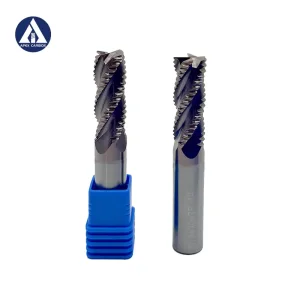
China 4 Flute Straight Shank Carbide Roughing End Mill with TiALN Coating Manufacturer, Supplier
View Specifications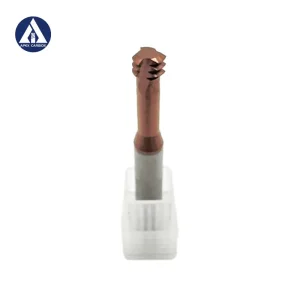
Wholesale Three tooth General machining thread end mill Manufacturers, Factories
View Specifications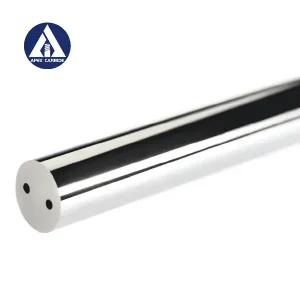
China Tungsten Carbide Rods with one or two Straight Coolant holes in blank or h5 ground Manufacturers, Suppliers
View Specifications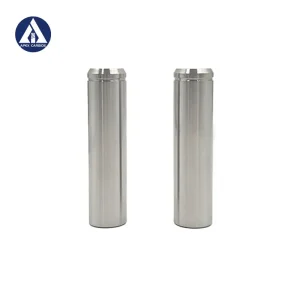
China Custom Tungsten Carbide Cylindrical Parts with Slotted Top Supplier, Suppliers
View Specifications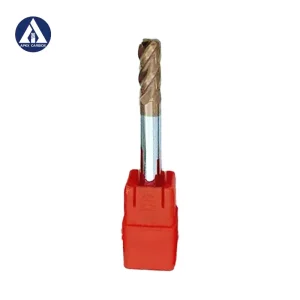
Wholesale HRC55 High Performance Solid Carbide Milling Cutter Manufacturers, Supplier
View Specifications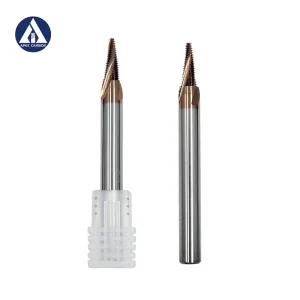
Wholesale Tapered Thread Milling Cutter with TiALN Coating Manufacturers, Factory
View Specifications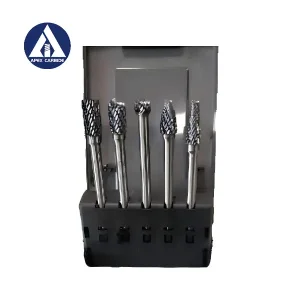
Wholesale Carbide Rotary Burrs with High Quality Short Delivery Time and Low MOQ Supplier, Factory
View Specifications